
When winter sun glare hits an office, the first request we often hear is for the darkest film available. In Seattle, that is usually the wrong choice. Dark film cuts glare on the few sunny mornings. It also takes daylight on every gray day, blocks free winter heat and puts more stress on cold glass.
This article walks through each trade-off with 3M and industry data. It also shows how we pick a lighter film that still solves the glare.
Winter glare comes from the angle of the sun, even though the sun is weaker than in summer. According to KIRO 7 Weather, the Seattle noon sun reaches about 66 degrees in June. In late December, it reaches only about 19 degrees. Low sun shines straight through the glass and across desks, so people at the window get it in their eyes.
The problem lasts for a few months, and so does the gray weather. KIRO 7 calls December and January “The Big Dark.” The region gets the least solar energy of the year then, and many days are cloudy or foggy. Any film you choose for glare has to work through both kinds of days. That is where dark film runs into trouble.
Window film glare numbers measure lost daylight. The IWFA’s 2026 Advanced Solar Control Education Guide explains how glare reduction is measured. It compares the visible light through filmed glass with the light through plain clear glass. A film that cuts more glare always lets in less light, on sunny days and gray ones alike.
The graphic below compares three 3M Prestige films on 1/4-inch clear single-pane glass, using the 3M Prestige Series data sheet. The last column is the light-to-heat ratio. A higher number means more daylight comes in for each unit of solar heat.
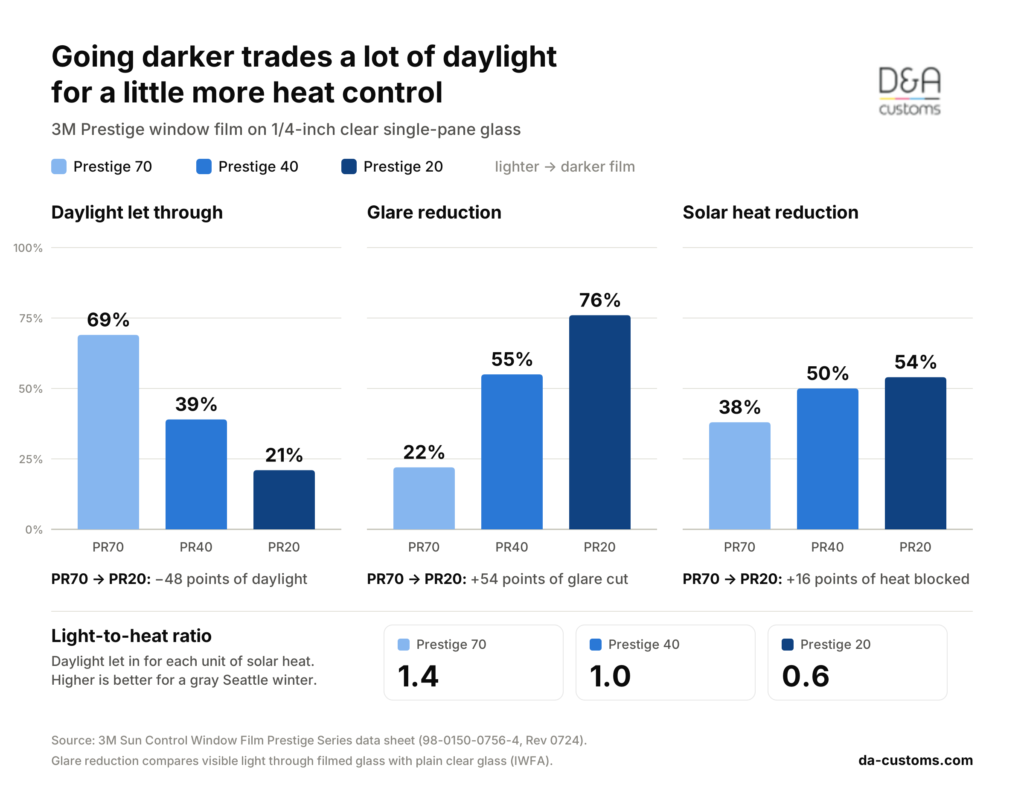
Moving from Prestige 70 to Prestige 20 cuts daylight from 69% to 21%. Solar heat reduction only rises from 38% to 54% over the same step. In a gray Seattle winter, a dark film keeps the room dim all day to fix glare on a handful of mornings, so people turn the lights on. For more on these spec terms, see what window film spec numbers actually mean.
Sun through the glass in winter warms the building for free. The IWFA guide calls this passive solar gain and explains that films which cut solar heat also cut that winter benefit. In its example, cutting solar heat lowers yearly energy costs in Phoenix. In a heating climate like Boston, it may bring a modest increase.
The guide also says the answer depends on the building. Peak demand charges, electricity and fuel prices, and uneven sun on different sides can make solar control worth it even in a cool climate. For that reason, the IWFA recommends an energy analysis of each commercial building before a film upgrade. For large buildings, it suggests asking the film maker about one.
For winter glare, a light film cuts the glare and keeps more of the free heat. A dark film gives up more of that heat for every point of glare it removes. If people at the window are cold rather than squinting, the fix is different. We cover it in why the desk by the window is always cold.
Glass cracks from heat when one part of a pane gets much hotter than another. The IWFA guide describes the classic case: glass cools overnight, then the morning sun heats the center while the edge under the frame stays cold. A cold, sunny winter morning on south-facing glass creates exactly that setup.
Film raises or lowers that risk depending on how much heat it holds in the glass. The IWFA guide names solar absorption as often the biggest factor in picking a film for a window. It warns against the darkest high-absorbing films on many glass types. It also says any glass except tempered glass can crack if the wrong film goes on, and double-pane units need extra care.
Darker film generally holds more heat in the glass, so a dark winter choice can add risk on top of lost daylight. We cover the details in can window film break your windows. The short version: glass type comes first, and the shade of film comes second.
Dark film still has a place in rooms that care more about screens than daylight. Training rooms with projectors, control rooms and edit suites often need the light cut further. The people in them may also prefer a dimmer room. For those spaces, a darker Prestige shade can be the right call if the glass checks out.
We choose room by room instead of putting one dark film across the whole building. A lobby, a row of perimeter desks and a projector room can each get a different shade. Blinds still help for the worst hour of the day. Rooms that need full blackout are better served by blinds.
Our goal is the lightest film that solves the glare. We follow the same order on every winter glare project, and the first step is always the glass. The list below shows that order.
This order keeps daylight and free heat in most of the building. It also keeps dark film off glass that cannot handle it. For larger buildings, we can ask 3M about an energy analysis before the project starts.
D&A Customs is a certified 3M window film dealer with locations in Tukwila and Bellevue. We offer a free winter glare check for offices in Seattle, Bellevue, Redmond and Tukwila. We look at the glass, the problem desks and the rooms that need the most light control. Then we recommend the lightest 3M film that fixes the glare, and we tell you where a darker shade is safe.
Book your free glare check or call 425 633 6288.