
From October to March, this is the most common complaint in a glass-heavy office. The thermostat reads 72. The person at the window desk is still cold, and changing the setpoint does nothing.
The cold is coming off the glass itself. Your body sends heat toward that cold surface all day, and a thermostat has no way to measure it. Here is how that works, what a low-E window film changes on each type of glass, and where we will not install one.
Warm things send heat to cold things near them. You are warm. In winter the inside face of a window is the coldest surface in the room, usually by a wide margin.
Researchers at Lawrence Berkeley National Laboratory studied this for the U.S. Department of Energy. Their paper on window performance and human thermal comfort names three things that happen in winter. Your body gives off heat toward the cold glass. Cold air slides down the pane and moves through the room. And the side of you facing the window stays colder than the side facing the room. People who sit still feel all three the most.
Their example is the one every facility manager should see. A person sits about three feet from a full-height window. The room air holds at 70°F. The glass is standard clear double pane, and its inside face reads 45.3°F. Everything else in the room is at room temperature. The temperature that person’s body registers is 53.4°F.
That gap is the complaint. The room is at 70 and the person is living at 53. The study used a test condition of 0°F outside, which is colder than Seattle gets, so your gap will be smaller. The pattern repeats on every cold morning anyway.
Here is what the inside face of the glass reads under those same test conditions:
| Glass in the opening | Inside surface temperature |
|---|---|
| Single pane, clear | 16.9°F |
| Double pane, clear | 45.3°F |
| Double pane, low-E coating | 54.3°F to 57.2°F |
| Triple pane, low-E | 63.7°F |
Read the table as a comfort scale. The colder the inside of your glass, the more heat the person beside it gives up. You can check your own glass with an infrared thermometer. The survey steps near the end of this article show how, and this table tells you what the reading means.
Cold glass chills the thin layer of air touching it. That air gets heavier, slides down the pane, spreads across the floor and moves past people’s ankles. Nothing is leaking. A perfectly sealed window still does this.
The same study found the draft is the smaller half of the problem. Moving air accounted for no more than about 10% of the complaints in their winter models. The authors write that people often mistake heat loss toward cold glass for a draft, or feel real air movement caused by worn weather stripping.
This is where money gets wasted. Teams re-caulk the frames, put a space heater under the desk, or rebalance an air vent. The complaint comes back every winter. The fix has to make the glass warmer.
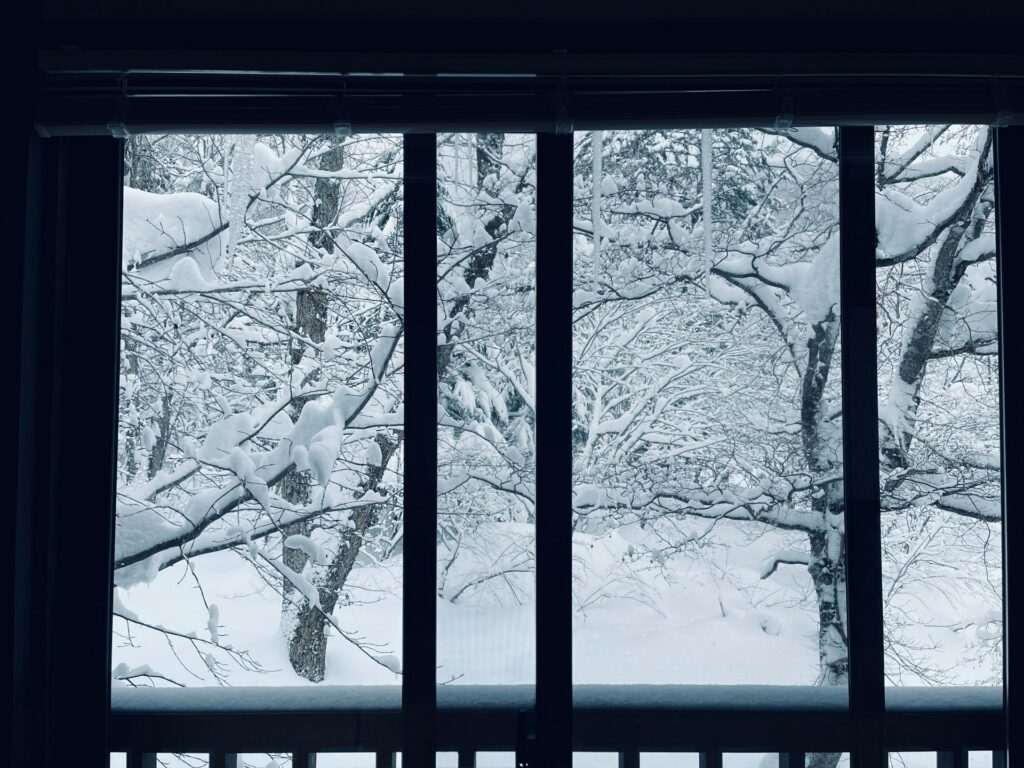
The complaint follows the glass. Interior offices almost never produce one. Two things drive it: how much glass a person sits in front of, and how long they sit still.
Someone in the middle of a floor is surrounded by surfaces at room temperature. Someone at a window wall has a large cold surface right in front of them. LBNL modeled that exact case, with glass across the whole outside wall and the person three feet away.
Sitting still makes it worse, and the study says so directly. A person typing at a desk makes very little body heat and gives up more than they produce. Corner offices and glass conference rooms have both problems at once, which is why they show up first on the list.
The LBNL paper puts the commercial cost plainly: in commercial buildings these problems make the space less attractive to tenants. That belongs in a leasing conversation, not only a maintenance one.
Someone touring a perimeter suite at 9 a.m. in January learns something about the building that new finishes cannot hide. The property managers we work with watch this closely. Cold seats get abandoned, desks move inward, and the tenant pays rent on space nobody uses.
A low-E film has a coating that reflects heat back into the room instead of letting it pass out through the glass. The inside of the glass stays warmer, and the person sitting there loses less heat. 3M describes its low-E films as giving insulation much like upgrading a single pane to a double pane, and a double pane to a triple pane.
The same 3M page cites the U.S. Department of Energy: nearly 40% of the heat lost from commercial buildings goes out through the windows. It also cites Cornell Cooperative Extension: a single-pane window loses 20 times as much heat as the same area of insulated wall. Glass is the weakest part of the wall, and in most Seattle offices it is also the biggest part.
What you gain depends on what is already in the opening. These are 3M’s published lab numbers for Thinsulate Climate Control 75 on clear glass:
| Existing glass | U-value before | U-value with film | Less heat lost | Daylight before | Daylight after | SHGC before | SHGC with film |
|---|---|---|---|---|---|---|---|
| Single pane, clear | 1.03 | 0.62 | 40% | 89% | 74% | 0.82 | 0.53 |
| Double pane, clear | 0.47 | 0.36 | 26% | 79% | 66% | 0.70 | 0.51 |
A lower U-value means less heat escapes in winter. A lower SHGC means less of the sun’s heat comes in during summer. 3M lists these as lab values, so treat them as a guide to what your building can gain.
Two things stand out. Single-pane buildings gain the most, which is why older Pioneer Square and Georgetown stock responds so well. The film also keeps most of the daylight, so nobody has to solve the problem by closing the blinds, which we covered in window film vs. blinds. It works in both seasons on the same glass. Our payback breakdown for Seattle and Bellevue office buildings shows how that math runs, and the HVAC comparison covers the cooling side.
Film makes the glass warmer. It does nothing about the other three causes of a cold perimeter zone, and we say so on site before anyone signs.
Bring us a floor with two of these and film is still worth doing. Bring us a floor where every complaint traces back to one fogged wall of glass, and we will tell you to call a glazier first.
Most film companies publish the claims and skip the limits. 3M publishes both. Its technical bulletin for Thinsulate Climate Control 75 lists the places this film causes trouble, and we follow it.
We would rather drop two walls from a quote than leave a building with a warranty problem in March. It also means the answer changes wall by wall instead of one product for the whole building. A west-facing wall where summer heat is the bigger problem usually gets a different 3M film, such as Prestige. The insulating film also carries that metal layer, which brings one more trade-off. We will cover it in a separate article.
You can rank your own problem walls before you call anyone. It takes one person, one afternoon and an infrared thermometer.
Take that sheet into any bid conversation and you will know which walls deserve film and which need a glazier or a mechanical contractor. It also stops a vendor from quoting a whole floor when three bays carry the problem.
This is the question every facility manager asks next, so here is the short version. Film goes on the inside face of the glass, so there is no exterior work, no lift and no glass coming out. Crews work window by window. A desk needs to be clear for a short time, then the person moves back in.
Most of our office work runs after hours or over a weekend when a floor cannot be disturbed. Plan for one thing afterward. This film dries slower than standard film, so the glass can look dimpled or hazy for a few weeks. 3M gives it about 30 days to settle and reach full adhesion. Leave the glass alone for that first month, then clean it normally.
We run a free winter comfort walk-through for commercial buildings in Seattle, Bellevue, Tukwila, Renton, and the rest of the Puget Sound area. It includes surface temperature readings on the glass and the walls, a complaint map by wall, and glass identification for every opening.
You get a written recommendation naming the walls we would film, the product for each one, and the walls we would leave alone. September is the last month with enough lead time to get film on the glass before the cold complaints start.
Contact D&A Customs to book the walk-through, or see what a commercial window tinting project involves.