
May is when most property managers finalize their summer cooling budgets. HVAC upgrades are the default answer: more tonnage, newer units, smarter controls. But there’s a question worth asking before the budget gets committed: what’s actually causing the heat problem? For many Seattle office buildings, the answer is glass.
Seattle’s commercial building stock wasn’t built for heat. Before June 28, 2021, the region had recorded only three days above 100°F in its entire history. That summer, temperatures hit 108°F over three consecutive days. Property managers added portable cooling units, HVAC contractors ran six-week backlogs, and buildings designed for mild Pacific Northwest summers became genuinely unlivable.
We’ve assessed many commercial properties in the Puget Sound since that summer. The pattern is consistent. Buildings added cooling capacity under pressure and at peak contractor pricing. Most are still dealing with the same complaint: the west and south sides of the floor are 10–15°F hotter than the rest, perimeter workstations are miserable in July, and the AC runs constantly without reaching setpoint.
On a recent job at a Bellevue office, the facility director told us they’d replaced two rooftop units the year before and still had tenants calling in heat complaints every afternoon. We assessed the west facade, floor-to-ceiling glass with no tinting or treatment. The problem wasn’t the equipment. The cooling budget goes up. The underlying cause stays the same.
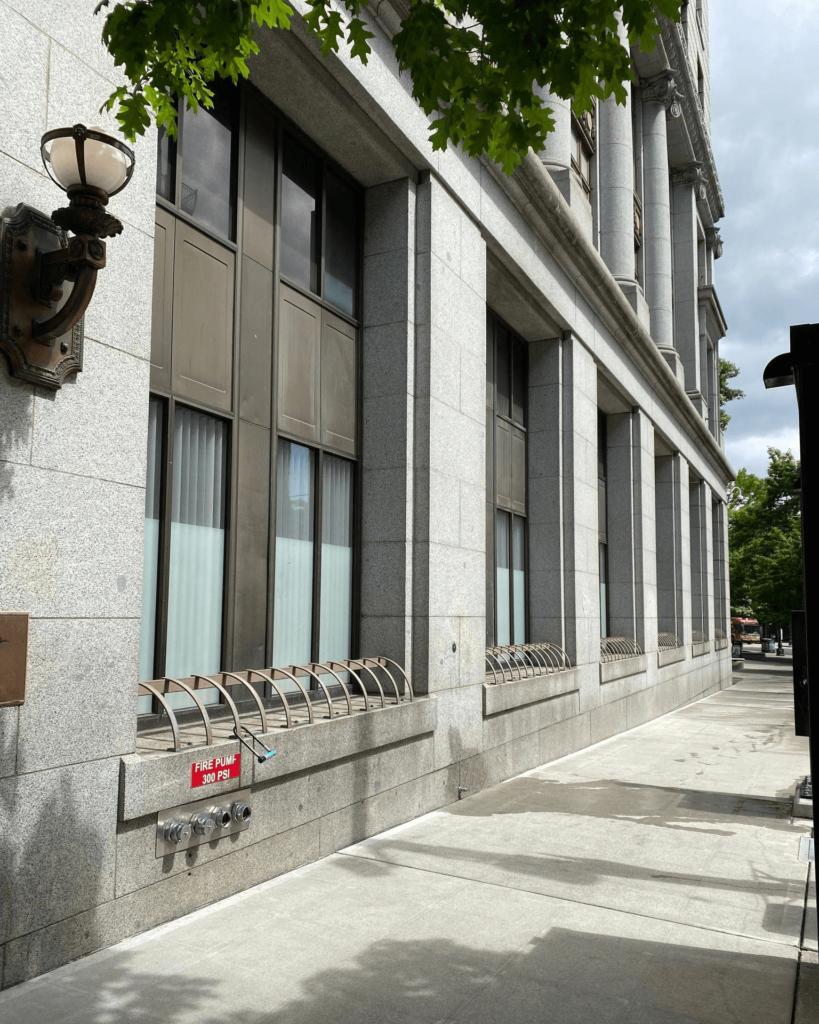
Solar Heat Gain Coefficient (SHGC) measures what fraction of the sun’s heat passes through a window and enters the building. Standard commercial glass without treatment carries an SHGC of around 0.70–0.87. That means most incoming solar energy enters the space directly.
According to the U.S. Department of Energy, solar heat gain through windows accounts for roughly one-third of a commercial building’s total cooling load. That’s a structural cause, not a minor inefficiency. The HVAC system on a west-facing floor in Seattle is fighting a heat source positioned three feet from every employee near a window, and the load peaks in the afternoon, when the system is already running hardest.
Adding cooling tonnage addresses the effect. It doesn’t change how much heat is entering the building each hour. We explain this on every commercial assessment we run, because it changes how property managers think about the capital decision.
Replacement costs vary based on what you’re replacing and how accessible it is. A single rooftop unit serving a smaller commercial space runs $15,000–$30,000 installed for buildings in the 2,000–5,000 sq ft range. For a 5,000–15,000 sq ft office, a typical mid-size Seattle floor plate, expect $15,000–$50,000 per unit replacement, including electrical integration and controls. Larger buildings needing multiple units or chiller systems can run well past $50,000.
Seattle-specific factors push these numbers higher. Rooftop access in urban buildings requires crane time, adding $1,000–$3,000 per placement. Upgrading to newer controls or integrating into a building automation system adds another $2,000–$10,000. A Seattle City Light case study of a 70,000+ sq ft South Lake Union office showed a major HVAC controls upgrade at $122,000, with base and performance incentive recovery of up to $40,000 after one year of verified savings.
Seattle City Light’s 2026 commercial incentive schedule does offer rebates worth claiming: advanced rooftop controls qualify for $120–$500 per ton, and heat pump and fan system improvements earn $0.36 per kWh saved. These help offset capital cost, but the net outlay for any meaningful cooling upgrade is still well into five figures.
The honest limitation of any HVAC upgrade: once the new equipment is running, the solar load coming through the glass is unchanged. You’ve invested in handling the heat better. You haven’t reduced how much heat enters.
3M solar control films for commercial applications run $5–$8 per sq ft installed for standard options. The 3M Prestige series, designed to reject up to 78% of solar heat while maintaining visible light transmission above 70%, typically runs $10–$12 per sq ft installed. The total project cost depends on your glass area, building access, and the film spec that best fits your glass type.
What the film does is documented, not estimated. As a 3M-authorized dealer, we produce the Solar Heat Gain Coefficient before and after installation for every commercial project, specific to that glass-film combination. A property manager gets a real number, not a marketing range. For a building with standard commercial glazing, the right 3M solar control film cuts the heat entering through that glass by more than half.
The Department of Energy ranked window film among the top 50 commercially available energy conservation technologies, citing a typical payback period of around three years. 3M’s own data puts annual savings at $1–$2 per sq ft of film installed, or up to 19 kWh per sq ft of glass treated. Where your building lands in that range depends on sun exposure, existing glass type, local electricity rates, and the specific film installed.
Glass compatibility matters more than most installers acknowledge. Certain film types applied to older double-pane units can cause thermal stress that cracks the seal. Before we specify any film, we assess the existing glass type and frame condition. Every project. It’s not an upsell, it’s what prevents a warranty claim two years later.
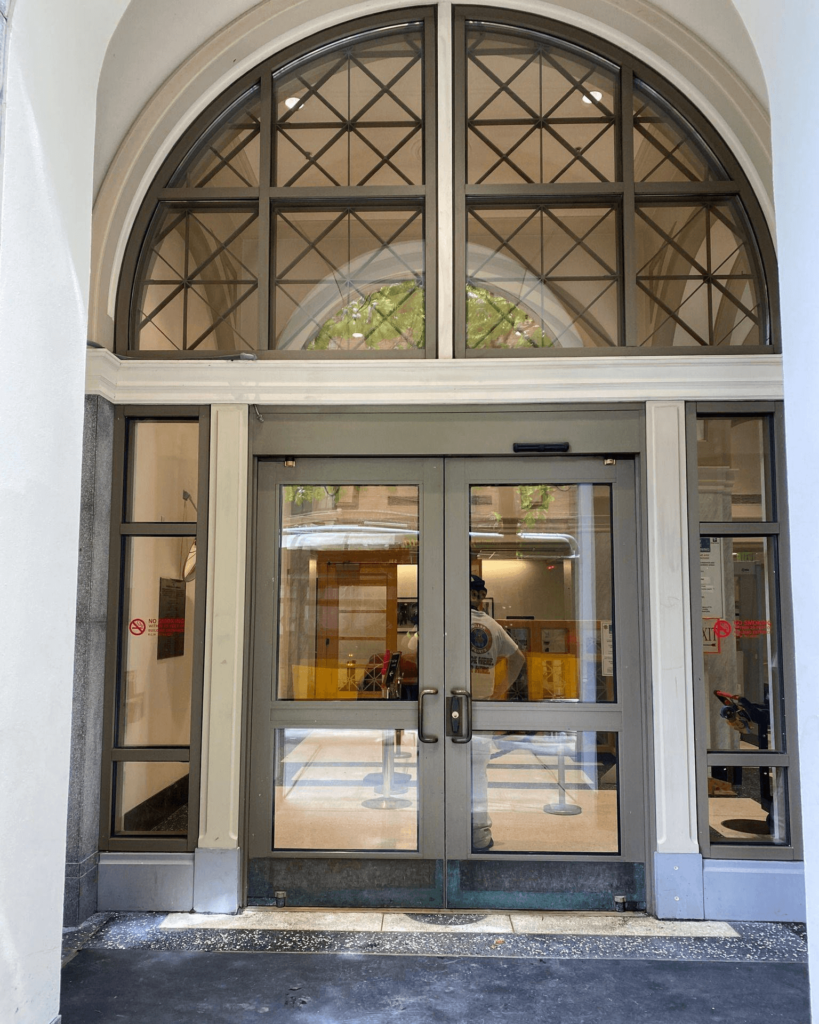
The figures below use a hypothetical 20,000 sq ft Seattle office building with 4,000 sq ft of treated glass on south and west exposures. These are illustrative examples within verified cost ranges — actual project costs require an on-site assessment.
| HVAC cooling upgrade | 3M commercial window film | |
| Upfront cost | $30,000–$60,000 (2 RTU replacements, crane, controls) | $20,000–$48,000 (4,000 sq ft, standard to Prestige) |
| Estimated net cost | $15,000–$45,000 after SCL rebates | $12,000–$48,000 |
| Annual energy savings | 10–15% reduction on affected zones | $4,000–$8,000/yr ($1–$2/sq ft × 4,000 sq ft) |
| Typical payback period | 5–10 years | 3–6 years |
| Reduces solar load? | No — heat through glass unchanged | Yes — 50%+ reduction through treated glass |
| Disrupts operations? | Yes — equipment replacement, possible tenant notice | Minimal — most floors completed in 1–2 days |
| Product lifespan | 15–20 years (equipment) | 20–30 years (3M film with warranty) |
Neither scenario is wrong. They’re solving different problems, at different costs, with different payback profiles.
HVAC equipment has a lifespan. If your rooftop units are approaching 15–20 years old, you’ll replace them regardless of what else is in the budget. The question is sequencing.
Either way, window film and HVAC improvements compound rather than compete. Film makes any cooling system run less hard. HVAC ensures you have capacity for peak demand. Most Seattle commercial buildings need both eventually — the decision is which problem is costing you money this summer.
We offer a no-cost on-site assessment for commercial properties in Seattle, Bellevue, Tacoma, Kirkland, and Renton: glass compatibility check, sun exposure analysis by facade, and a 3M film specification with a projected SHGC reduction and energy savings estimate — before you commit to anything. As a 3M-authorized dealer, our recommendations are tied to verified product data, not a rule-of-thumb range.