
Seattle has a reputation for rain and clouds. What it doesn’t advertise is what happens when the sun breaks through in June, July, and August, particularly in the afternoon. West-facing glass in South Lake Union, downtown Bellevue, and the Eastside tech corridor turns into a radiator by mid-afternoon. ACs run at full capacity, blinds go down, views disappear, and nobody in the perimeter zone can look at a screen without squinting. The problem isn’t your HVAC system. The problem is the glass.
We’ve been installing commercial window film across Puget Sound for years, and the west-facing afternoon heat complaint is the most consistent thing we hear from facility managers in the summer. This article explains why it happens, what’s actually driving the heat, and what a single installation can do about it, without darkening the office or disrupting operations.
Seattle sits in DOE Climate Zone 4C (the Marine classification). That means cool, wet winters and mild summers, but “mild” doesn’t mean problem-free when it comes to solar gain. Because Seattle is relatively far north (latitude ~47°N), the summer sun travels a lower arc than in sunbelt cities. By mid-afternoon, the sun shifts into a position where west-facing glass receives far more direct exposure than it does earlier in the day.
This matters because glass is most vulnerable to solar penetration when sunlight hits it straight on. South-facing windows deal with high-angle noon sun that roofs and overhangs can partially block. West-facing glass in the afternoon gets no such relief: the sun is right at eye level, and there’s nothing in the building envelope standing between it and the interior. Some waterfront properties may also experience additional glare from reflected sunlight.
Seattle’s overcast baseline also works against most buildings here. Because sunshine is intermittent for most of the year, facilities are typically under-equipped for when it actually arrives. Buildings in Phoenix have solar control as standard. Buildings in Seattle often have single or older double-pane glass with no additional film, which is fine 200 days a year and a real problem on the 40 sunny summer days when occupant complaints spike.
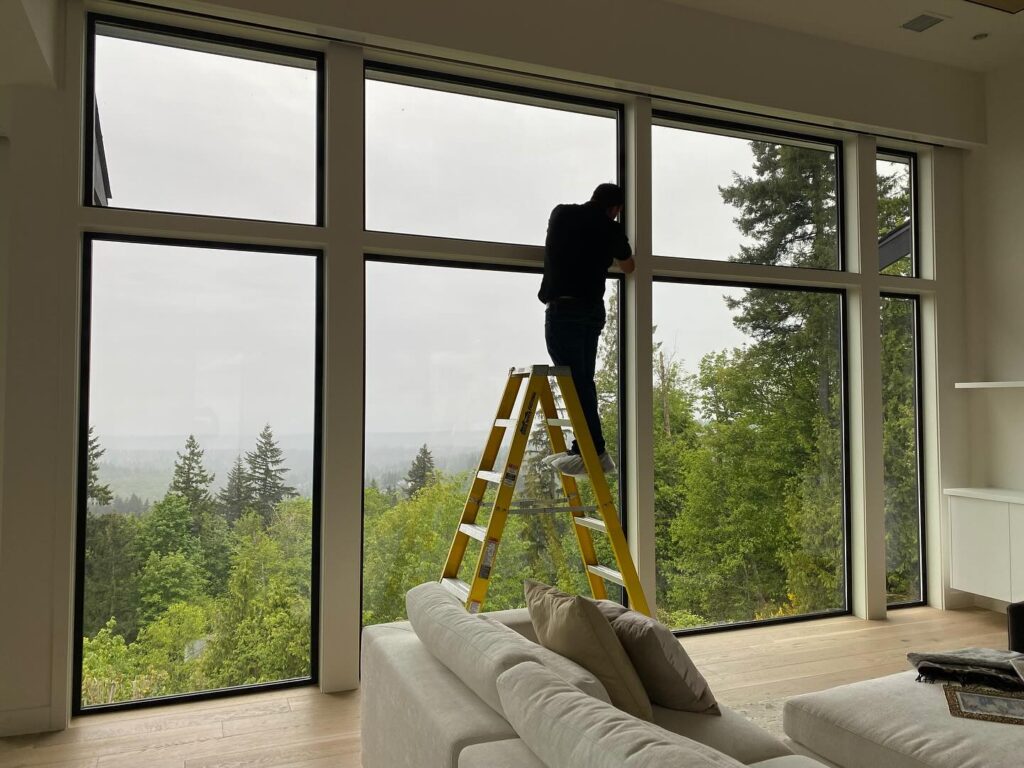
Most of the heat associated with sunlight comes from infrared radiation, though visible light can also contribute after it is absorbed by interior surfaces. Infrared arrives before your occupants consciously notice the temperature change. By the time the perimeter zone feels hot, the heat has already been accumulating for over an hour.
The result is a predictable sequence of problems across the afternoon:
Glare is the other piece of this. According to the American Optometric Association, 58% of office workers experience digital eye strain, and afternoon sun washing out west-facing monitors is one of the most direct causes. A Cornell University study found that optimized daylighting (light without glare) reduced eye strain symptoms by 84% and cut drowsiness by 10%. The goal isn’t darkness. The goal is controlled light without the heat spike that makes perimeter zones unusable.
The instinct for most facility managers is to tint the glass, and standard tint does reduce solar gain, but by reducing visible light transmission across the board. A basic reflective film blocks heat by blocking everything, which turns bright, productive office space into something that feels like a cave. For tech offices in SLU or Bellevue with floor-to-ceiling glass, that’s not a viable trade-off.
The technology that actually solves this is spectrally selective film. Instead of blocking all wavelengths equally, it targets the infrared spectrum (the wavelengths responsible for heat) while leaving visible light mostly intact. Visible Light Transmittance (VLT) is the key number: it tells you how much natural light passes through. With standard tint, higher VLT means weaker heat rejection. With spectrally selective film, the two aren’t linked — you get both.
Here’s how the two approaches compare on the metrics that matter for an office building:
| Standard Reflective Film | 3M Prestige (Spectrally Selective) | |
|---|---|---|
| Visible light blocked | High — office noticeably darkens | Low — natural appearance maintained |
| Infrared rejection | Moderate | Up to 97% |
| Exterior appearance | Mirror-like | Clear, low-reflective |
| Signal interference | Possible (metallized construction) | None (non-metallized) |
| Commercial warranty | Varies by product | Up to 15 years via certified dealer |
The difference in practice: a Prestige 70 film allows 70% of natural light through and still outperforms standard tint at 20 VLT on heat rejection. That’s the technology gap between the two product categories.
3M Prestige Series films reject up to 97% of the sun’s infrared light and block up to 99.9% of UV rays, while maintaining low interior and exterior reflectivity. There’s no mirror-like exterior finish: the glass looks like glass. From inside the building, views remain clear. The film operates invisibly, which matters for offices where aesthetics and client-facing appearances are part of the environment.
The headline performance numbers from 3M’s product documentation:
The SHGC (Solar Heat Gain Coefficient) is the technical metric used to compare window performance before and after film. Film lowers the effective SHGC of your existing glass without replacing it. For a west-facing office building running older double-pane glass, the improvement from Prestige 40 or Prestige 70 is the difference between a cooling system fighting the glass and a cooling system doing its actual job.
As a 3M certified commercial dealer, we install Prestige with the full 3M manufacturer warranty, which for commercial applications runs up to 15 years. That warranty is only valid through certified installers. An uncertified installation using the same film product loses the manufacturer warranty entirely, which is worth understanding before accepting a lower quote from a non-certified shop.
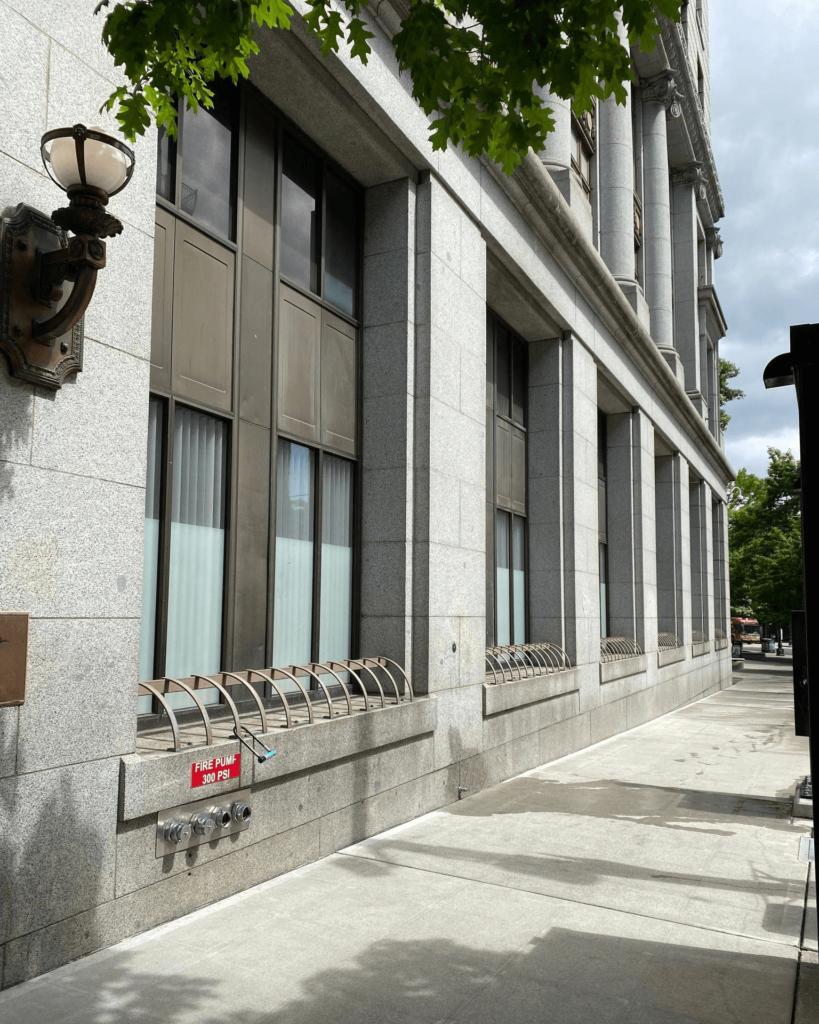
We’ll give you the honest version, not the sales version. Window film doesn’t replace HVAC; it reduces the thermal load your HVAC system has to manage. On west-facing glass in a Bellevue tech office or a South Lake Union professional services building, the practical outcomes are fewer perimeter zone complaints, more comfortable working conditions near the glass, and lower peak cooling demand on hot summer afternoons.
The energy data backs this up. Approximately 33% of commercial cooling costs come from solar heat gain through glass, and on a building with significant west-facing glazed area, that’s a meaningful share of the utility bill. The DOE recognizes window film as one of the fastest-payback commercial energy conservation technologies, with a baseline payback of approximately three years.
Installation typically doesn’t require closing the office. We schedule commercial projects around operating hours, often early morning or weekend installs for client-facing spaces. For most office floors, a full installation takes one to two days. The film cures within 30 days, during which some minor haziness is normal; after cure, performance is immediate and consistent for the life of the film.
We’ve completed commercial installations for clients including One Medical, a healthcare provider with specific requirements around occupant comfort and glass performance. West-facing office heat is a problem we’ve solved many times in this market, and the results are consistent.
You don’t need a formal energy audit to determine whether window film is worth investigating. A focused walk-through during peak afternoon hours tells most of the story. Here’s what to look for:
If you manage multiple tenants or a large floor plate, a quick survey of facilities staff about where heat and glare complaints originate will focus the assessment on the areas where film will have the most impact.
We’re a 3M certified commercial installer with two locations serving Tukwila and Bellevue, which means we’re local to the buildings we work on, not dispatching crews from out of region. In March 2026, we received 3M’s recognition as Best New Dealer on the West Coast, a distinction that reflects installation quality and process rather than sales volume.
We don’t do residential tinting. Commercial window film is what we do, and we know the specific requirements of Seattle and Bellevue office buildings: lease considerations, building management approvals, after-hours installation logistics, and the glass compatibility assessment that determines which film spec is correct for your existing glazing. If you’ve been comparing film quotes and getting different product recommendations from different vendors, we’re glad to explain why: sometimes it’s a legitimate difference in film selection, and sometimes it’s a spec mismatch that matters once the film is on the glass.
If you’re weighing this against an HVAC upgrade or other building improvements, our comparison of HVAC vs. 3M commercial window film covers the cost math directly.
We offer free on-site assessments for commercial projects. We visit your building, evaluate the west-facing glass, confirm glass compatibility, and give you a clear product recommendation and realistic expectation before any commitment.
Request a free assessment at DA Customs, or call us directly at 425 633 6288.