
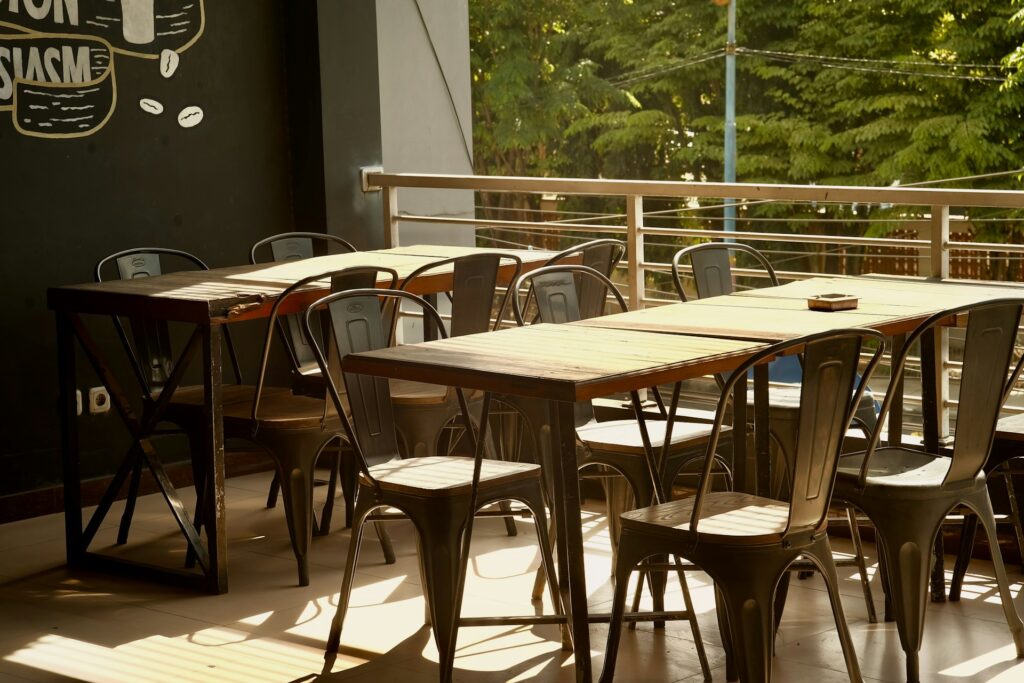
The window table is supposed to be the best seat in the house. But by 2 p.m. on a sunny day in July, it’s often the seat nobody wants. Hosts start sending people to tables in the back. The tables by the window, the ones that pull people in from the street, sit empty during the hottest part of the day.
We see this happen at restaurants and cafés across Seattle and Bellevue every summer. The real problem is the glass, not how the room is set up or how staff work. And fixing it does not mean covering up the windows that bring customers in the door.
The sun hits bare glass and heats up everything close to it — tables, chairs, and the people sitting there. On a window that faces west, this heat builds up all afternoon and stays through early dinner. Staff notices it fast: the same table by the window stays empty while tables a few feet away fill up first.
For restaurants and cafés, this extra heat adds to a kitchen that is already hot. The U.S. Department of Energy says windows affect end uses that make up about 40% of a building’s total energy use. A kitchen already runs ovens, fryers, and big fridges all day. When the sun also heats up the front of the store, the air conditioner has to work even harder. We cover this same problem in Why West-Facing Offices Overheat by 3 PM, just add a hot kitchen on top of it.
Heat is easy to see. Glare is the problem that costs money without anyone noticing right away. A cash register or order screen near a west-facing window can catch strong sun by mid-afternoon, and the screen becomes hard to read from some angles.
Staff start guessing totals or typing orders again. Small mistakes add up over a busy shift. Menus reflect the same glare, so guests at window tables have trouble reading them too. That slows down ordering during the exact hours a restaurant wants tables turning over fastest.
Pastry cases, wine bottles, and menu signs near the window get more sun than furniture near a normal home window, simply because storefront glass gets more direct sun for more hours each day. 3M’s Prestige Series film blocks up to 99.9% of UV rays. That slows down fading, so displays don’t look dull after a season in the sun.
But heat control matters even more for a storefront. Prestige Series blocks up to 97% of the sun’s infrared light and up to 60% of the total heat that comes through the glass. It does this without making the window darker or changing how the storefront looks from the street. That mix — less heat, same clear glass — matters more for restaurants and cafés than almost any other space we work in, because the glass itself helps bring customers in.
Most restaurant owners try something else first. It helps to know what each option actually does and where it falls short. Here’s how the three most common fixes compare on cost, time, and what they fix.
| Option | What it fixes | What it doesn’t fix | Typical install time |
|---|---|---|---|
| Awnings/umbrellas | Blocks sun for tables right underneath | Doesn’t help tables farther from the window; needs care each season | 1–2 days |
| Full glass replacement | Cuts heat and UV for the whole building | Takes weeks to build, costs more, gets in the way of service | Several weeks |
| Window film | Cuts heat and glare across the whole storefront | Doesn’t shade outdoor patio tables | 1–2 days per window wall |
Film sits in the middle on cost and how much it gets in the way of business. It’s the only fix that treats the whole storefront window at once without touching the building itself. It’s the same commercial window tinting work we do for offices and schools, built for a storefront that has to stay open. On jobs we’ve done for restaurant groups in Bellevue and Seattle, film has fixed heat and glare without closing the dining room or changing how the storefront looks. It also tends to pay for itself faster than replacing the glass—we walk through that math in How Fast Does Commercial Window Film Pay Back.
A restaurant’s window is part of its sign. People walking by see the room, the lights, and the crowd before they even read a menu. A storefront that looks dark or mirrored from outside looks closed, even when it’s open. That’s why we use Prestige Series for restaurant and café windows instead of a darker film. It keeps the glass looking clear from the sidewalk, while it quietly blocks the heat.
Some owners also add a frosted or etched strip along the bottom of the window. It can hold a logo or give some privacy near booth seats, without losing the open feel that brings people in. This fixes a different problem than our retail security film, which is built to stop break-ins, not to fix comfort. See 3M Security Window Film for Seattle Retail Storefronts for that side of storefront glass.
A restaurant can’t close for a week to get its windows filmed, and we don’t ask it to. We plan storefront jobs around business hours — early morning before you open, late at night after you close, or in steps if you want every table open during service.
A normal storefront job takes a few hours per window. A group with several locations can spread the work across a few nights without losing one single service. It’s the same staged plan we use for hotels and offices that stay open, just built around a kitchen and dining room that can’t sit empty for days.
If your window tables have become the seats nobody wants, we’ll come out and check the real problem (heat, glare, or both) and find where it hits hardest during your busiest hours. As a 3M-authorized dealer, DA Customs installs Prestige Series film on a schedule that works around your hours, with a plan built for your storefront and your kitchen’s heat load. Request a free storefront assessment.