Before installing 3M DI-NOC, it is worth slowing down for a quick check that can prevent real problems later. A wall or door may look clean and solid, yet the film can still fail if the paint is too fresh, the surface is sealed, or the material has low surface energy. The 3M Adhesion Test Kit helps spot these issues before any large sheets go up. In this guide, we explain why this test matters, what it tells you about a surface, and how it helps avoid edge lift, peeling, and costly rework on DI-NOC projects.
A quick adhesion test can save you from the most annoying DI-NOC problems: edges that lift, corners that pull back, and panels that start to peel after the job “looks done.” 3M calls out this risk in its DI-NOC guidance and says wall paint must fully cure, plus you should run the 3M adhesion test for each product and each different wall you plan to wrap.
For the test result itself, 3M’s DI-NOC installation guide gives a clear benchmark: about 800 grams of initial adhesion (measured with a spring scale) as a recommended target to hold the film in place during installation.
The 3M adhesion test kit is a straightforward way to see how DI-NOC will behave on a real surface, not a sample board. It uses small test pieces placed right on the wall, door, or panel you plan to wrap, then checks how firmly the film holds when pulled. This matters because surfaces that look identical can act very differently. One wall may grab the film right away, while another lets it slip due to paint type, sealers, or past patchwork. The test gives a clear answer before you commit material and labor, so there are no surprises after installation.
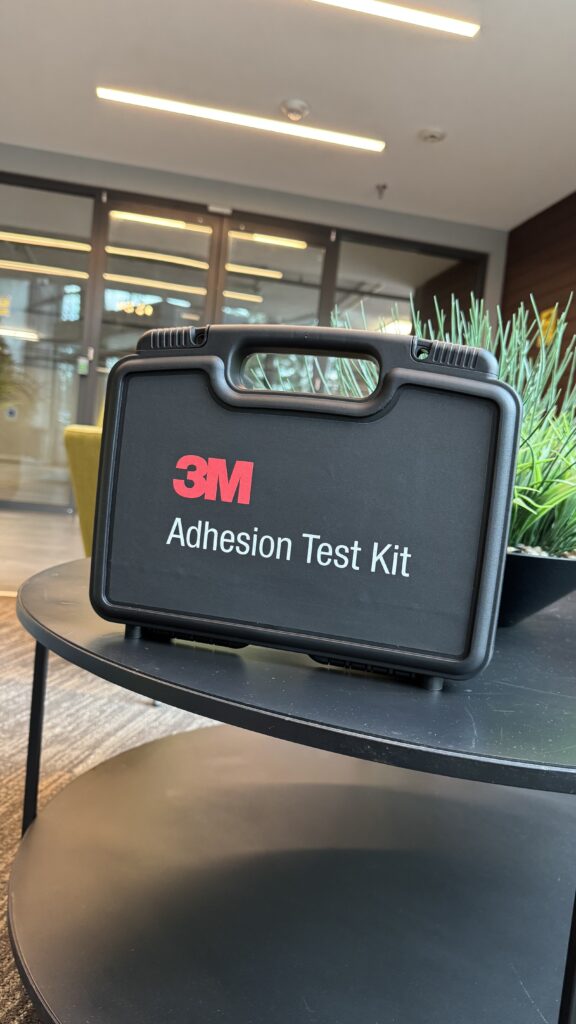
An adhesion test makes sense any time a surface gives you even a small reason to pause. Fresh paint is the most common case, especially low-VOC paints that feel dry to the touch but have not fully cured. 3M points out that paint cure time depends on the product and site conditions, and uncured paint can cause a weak bond or paint pull when the film is removed. 3M also recommends running adhesion tests on each surface and paint system, not just once per job. On real projects, one wall may work fine while the next fails due to a different paint batch, repair, or sealer.
At DA-Customs, we treat the adhesion test as a standard part of every DI-NOC project, not an extra step. It helps us confirm that the surface is ready before we bring full rolls of material on-site.
This approach lets us make clear decisions early and helps our clients avoid edge lift, peeling, and repeat work after install.
When we pull a test strip, we are looking for a clear, honest reaction from the surface. If the film stays put and takes real effort to remove, that surface is ready, and we can move forward with DI-NOC. If it lifts easily or comes off in one smooth pull, we pause the job. At DA-Customs, this often means giving fresh paint more time to cure, re-cleaning with the right method, or adjusting prep based on 3M guidance. Making that call early helps our clients avoid edge lift, peeling corners, and callbacks weeks after install.
When you choose DA-Customs for a DI-NOC install, we focus on getting it right before anything goes on the wall. Our process is built to avoid surprises and protect your space.
If you are planning a 3M DI-NOC project and want it done the right way from the start, contact DA-Customs to schedule a review and adhesion test before installation.