Glass walls make any space feel open and modern, but they can also be tricky because people don’t always see them until it’s too late. That’s where glass awareness stickers step in. A few smart markings on doors and partitions can stop accidents, keep your space up to code, and still look great. This guide walks you through what glass awareness means, why it matters, and how to get it right without losing your style with D&A Customs.
Glass Awareness: What It Is, Why It Matters, and How It Works
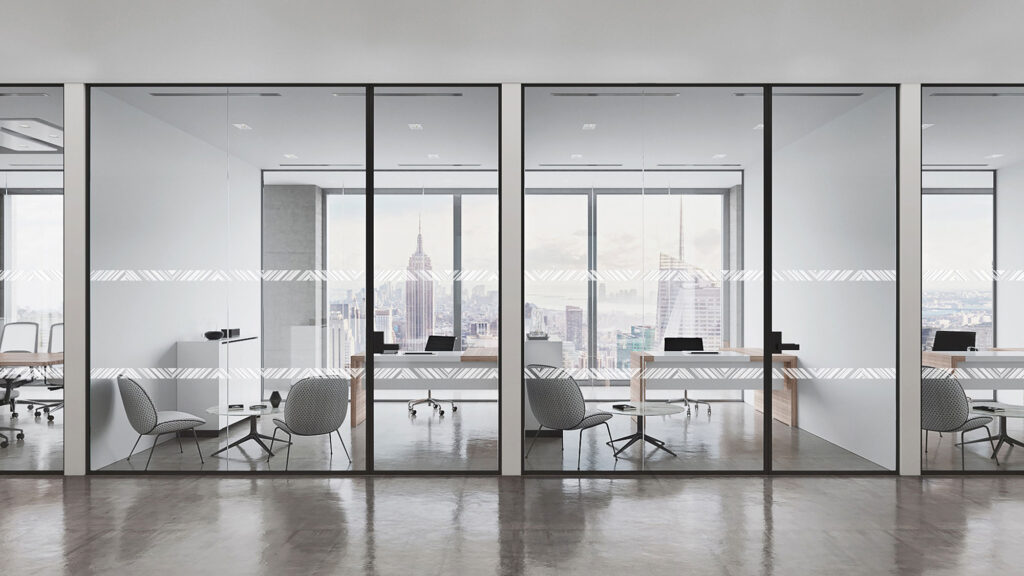
Glass awareness means marking transparent surfaces so people can see them before they walk into them. It sounds simple, but it prevents real injuries. In the U.S., tens of thousands of people visit emergency rooms every year because of glass collisions, according to the American Academy of Ophthalmology. Most of these accidents happen in offices, schools, and public buildings with large glass doors or partitions. A small, well-placed band of frosted film or decals at eye level can stop that from happening.
These markings also help meet accessibility and safety codes in most states, which require visible indicators on clear glass. At the same time, they can serve a design role, using subtle patterns or a company logo, which keeps the space professional without looking cluttered. In short, glass awareness combines safety, compliance, and design in one small but important detail.

Codes and Design Rules that Keep Glass Safe and Compliant
In the U.S., glass awareness isn’t handled by one single rulebook—it’s a mix of national codes and local tweaks. Here’s how it breaks down in plain terms:
- National level. The International Building Code (IBC) and the Americans with Disabilities Act (ADA) both influence how glass should look in public and commercial spaces. They don’t give one exact formula, but they agree that clear glass must be easy to spot and safe for everyone.
- Typical placement. Most local building codes ask for a visible strip or pattern between 30 and 66 inches from the floor. This area lines up with the average person’s eye level and helps prevent collisions.
- Design and visibility. Simple is best. Think horizontal frosted bands, dot grids, or logo repeats that contrast with the background and stay noticeable in daylight and artificial light.
- Washington State: In Tukwila, Bellevue, and nearby cities, inspectors use the Washington State Building Code, based on IBC 2021. It follows the same height rules and expects full-width markings on glass doors, sidelights, and panels near walkways. Because of the Pacific Northwest’s cloudy weather, opaque white or frosted films tend to perform best; they stay visible even when light levels change.
When you stick to these simple rules, your project stays safe, looks clean, and passes inspection the first time.
Materials for Awareness Graphics and When to Choose Each
Not all glass markings are the same. The right material depends on what your space needs: privacy, visibility, or a bit of both. Here’s a quick look at what usually works best:
- Frosted film. The go-to for most offices. It keeps the open look but still makes the glass visible. It diffuses light, adds privacy, and looks clean on both clear and tinted glass.
- Opaque vinyl. Perfect when you want a strong contrast or a solid color. It stands out clearly on doors and busy walkways, so no one misses it.
- Perforated film. Good for storefronts where you want graphics or logos on the outside but still need to see out. Just make sure it meets visibility rules—some cities are strict about that.
- Printed decorative film. Lets you mix safety and style. You can include patterns or branding while still following the height and contrast rules.
In short, the material you pick should fit both your look and your local code. The right choice makes your glass safe, compliant, and still good-looking.
Our Process at D&A Customs
Every successful glass awareness project starts with a solid plan. At D&A Customs, we handle every step carefully so your space meets code, looks good, and stays safe. Here’s how the process works:
- Code and site check. We review your local building requirements and inspect the glass layout on-site. This helps us confirm the exact band height, width, and contrast needed for your city.
- Measuring and layout. Our team measures each door and panel, marks eye-level ranges, and plans the placement so every marking line up perfectly.
- Design preview. We prepare mockups that show how the bands or patterns will look during the day and at night, helping you pick the right finish and opacity.
- Production and prep. Once approved, we cut the film precisely to size, label each section, and prep the surface so the application stays clean and bubble-free.
- Installation and final check. We apply the markings, remeasure the height, test contrast under different lighting, and take photos for your inspection records.
By the time we’re done, your glass doesn’t just pass inspection—it fits your space like it was part of the design from day one.
Branding Smartly Inside the Rules
Glass awareness doesn’t have to look dull or technical. With a few smart design choices, it can actually highlight your brand and make the space feel more intentional.
- Use your logo with purpose. A small, repeating logo or icon along the safety band makes glass stand out while quietly reinforcing your brand identity. For example, an office in Bellevue might use its logo in a light frosted finish that catches daylight but doesn’t block the view.
- Keep designs simple and readable. Patterns like horizontal stripes or soft gradients look elegant and still meet code. We’ve seen local inspectors in King County reject designs that were too thin or too transparent, so simplicity pays off.
- Think about lighting and surroundings. In the Pacific Northwest, cloudy days can wash out subtle tones. That’s why we often suggest opaque white or dusted crystal films; they stay visible in any light and match most interiors.
- Plan for change. Many businesses like seasonal updates. You can layer short-term vinyls over your base awareness bands (holiday colors, new logos, or event graphics) without removing the original film.
A well-thought-out design keeps people safe and makes every pane of glass feel intentional, not just compliant.
Common Pitfalls and How to Avoid Them
Even simple projects can go wrong if the details are off. At D&A Customs, we’ve seen a lot of glass awareness installs over the years, and a few common mistakes always show up. Here’s what we help our clients avoid:
- Too little contrast. A soft frost might look clean, but under cloudy Seattle light, it can almost vanish. We always test visibility in both daylight and artificial light before the final sign-off.
- Wrong height placement. Awareness bands should sit roughly between 30 and 66 inches from the floor, right in the average line of sight. Anything higher or lower can fail inspection.
- Broken or uneven patterns. The band needs to run continuously across doors and side panels. Skipping a section breaks the visual cue and defeats the purpose.
- Logos used alone. One logo in the corner doesn’t count as a safety marking. We recommend repeating the logo or combining it with a subtle frosted stripe across the width of the glass.
- Forgetting sidelights. Doors aren’t the only risk. Those narrow side panels next to them are just as easy to walk into, and most inspectors treat them the same way.
Our rule of thumb? Keep it visible, consistent, and simple. It’ll pass inspection and look good doing it.
Conclusion
Glass awareness is about meeting code, keeping people safe, and making your space look sharp. A clean frosted band or subtle pattern can stop someone from walking into a glass wall, pass inspection, and still match your style.
If your business is in Bellevue, Tukwila, or anywhere in the Seattle area, we can help you sort it all out. We’ll check local rules, create a mockup that fits your space, and handle the install start to finish. No guesswork, no stress, just glass that looks good and does its job.
Need help with your next project?
Reach out to D&A Customs for a quick quote or on-site review. We’ll make sure your glass is safe, compliant, and ready to impress.