
If you’ve spotted the Orenji Sushi Food Truck cruising around Issaquah, you know it’s hard to miss. That eye-popping vinyl wrap? Yeah, that’s our work at D&A Customs, and it’s helping Orenji turn heads wherever it parks. Featured on FOX 13 Seattle’s Food Truck Friday, this mobile sushi spot is serving up fresh vibes and bold branding, thanks to a wrap that’s as vibrant as the food. Let’s discuss how our custom wrap makes Orenji’s food truck a rolling standout in the Greater Seattle scene.
We’re all about making vehicles pop, whether it’s a food truck in Issaquah or a van in Tukwila. Using top-notch 3M and Avery Dennison vinyl, we craft wraps that are tough, sharp, and scream personality. For Orenji’s food truck, we brought our A-game, turning their vision into a mobile masterpiece. Folks love our process—collaborative, fast, and fun. Just check out what customers say: we’re easy to work with, quick on delivery, and obsessive about getting every detail right.
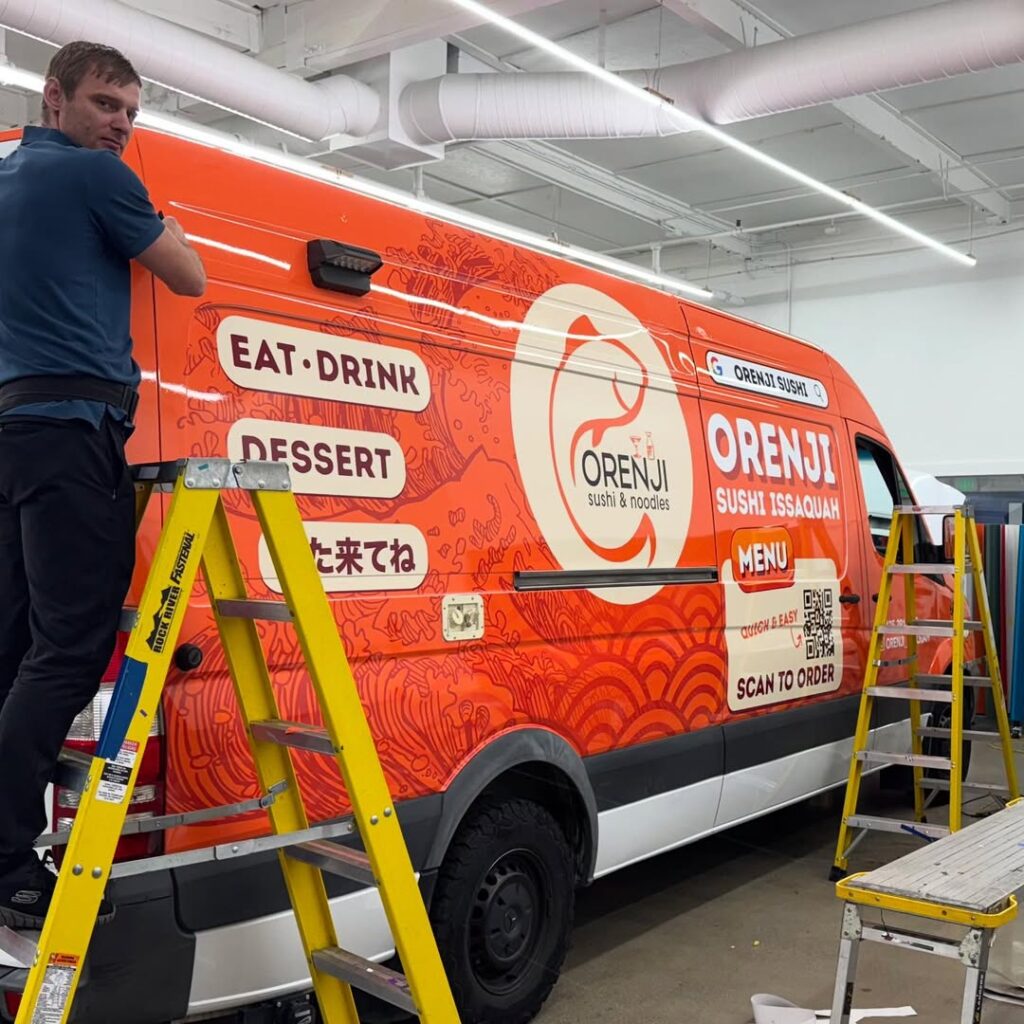
Orenji’s food truck wrap is a total vibe. We took their logo and Japanese-inspired style and cranked it up with bold colors and clean graphics. It’s not just a wrap—it’s a moving billboard that screams “Orenji Sushi” whether it’s parked at a brewery or rolling through a festival. Here’s what makes it special:
That’s the kind of impact we aim for.
This wrap isn’t just about looking good—it’s a marketing machine. Here’s how it’s helping Orenji get noticed:
Turning Orenji’s food truck into a showstopper was a blast.
Orenji Sushi’s food truck is killing it in Issaquah, and our custom wrap is a big reason why. With bold design, tough vinyl, and a pro finish, it’s turning the truck into a mobile magnet for attention. Whether it’s parked at a festival or rolling through town, Orenji’s wrap is getting them noticed, and we’re stoked to be part of it. Want your vehicle to stand out like Orenji’s? Swing by da-customs.com for a free quote and let’s make your brand pop!
Watch a video about the Orenji Sushi Food Truck from FOX 13 Seattle here.
School safety starts with smart choices, not complicated systems. While alarms and drills play their part, the actual structure of a building can often decide how well it holds up in a real emergency. One weak point stands out again and again—glass. That’s where safety window films come in. And thanks to available federal grants, schools don’t have to carry the cost alone.
Right now, schools have access to federal grants that help cover real security upgrades, like safety and security window films. These grants support critical measures that make a difference during emergencies. The film isn’t just for privacy; it’s designed to slow down intruders and give schools more time to respond. That extra time could mean everything during a crisis.
If you’re a parent, teacher, or school staff member, you don’t have to figure this out alone. We can walk you through the details and provide your school with the information it needs to apply.

Let’s be real—glass isn’t built to stop anyone. Most schools have big windows and glass doors that look nice but break way too easily. In a serious situation, it becomes a big problem. One hit, and someone can be inside in seconds. It doesn’t take special tools or a complicated plan—just force. That’s why so many safety improvements start with the glass. It’s the easiest way in, and also one of the easiest parts to strengthen.
Safety film won’t turn regular glass into armor, but it makes a huge difference when seconds count. If someone tries to break a window, the film holds the shattered glass in place instead of letting it fall apart. That makes it much harder to get through—and slows everything down. During a break-in or an emergency, even 30 extra seconds can save lives.
Here’s why schools across the country are already using it:
If you’re a parent, teacher, principal, or part of a school board, you can help start this conversation. Most schools have tight budgets and don’t know where to begin when it comes to applying for grants or picking the right safety upgrades. That’s where we step in.
At D&A Customs, we install 3M™ Safety and Security Window Films, and we’re proud to be a 3M Authorized Prestige Window Film Dealer. That means schools get trusted materials and expert work. We also help with the paperwork by providing detailed specs and support that your school can use when applying for funding. You don’t have to do it alone—we’re here to make it simple.
If your school hasn’t installed safety window film yet, now’s the time to ask why. A simple message from a parent, teacher, or PTA can start the process. Grants are available now, but they won’t be forever. We’ll provide everything your school needs to apply and get moving. One small push can lead to a safer place for every student inside.
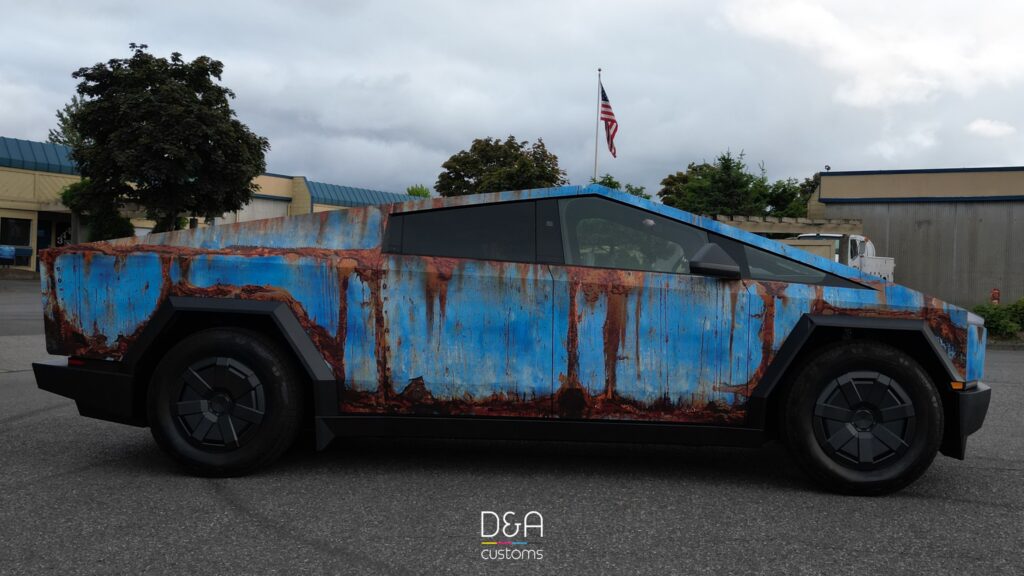
What makes it special? D&A Customs applied a full-body vinyl film that mimics decades of weathered blue paint and deep brown oxidation while the real stainless steel stays untouched. High-resolution printing, matte laminate, and seamless panel alignment turn the effect into a show-stopping illusion—viewers need to tap the body to realise it is film, not rust. Tesla’s own wrap programme offers colour films, yet nothing this radical.
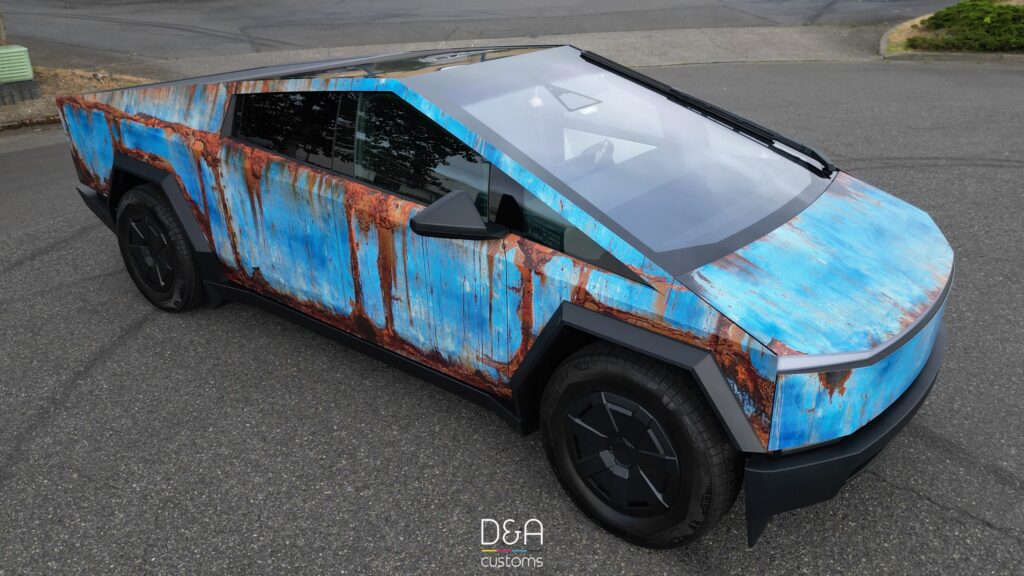

Thanks to D&A’s team, clients can choose alternative effects—brushed copper, forged carbon, even chameleon pearl—if a patina is not their style. Paint-protection film or ceramic coating can also top the wrap for extra scratch resistance.

Ready for a signature Cybertruck? Contact D&A Customs to sketch your concept and drive out with a one-of-a-kind finish.
Wraps don’t last forever. A little scratch, a peeling edge, or a faded panel can mess up the whole look. And when that happens, most people ask the same thing—should I fix just the damaged spot or redo the entire wrap? In this article, we’ll break it down in simple terms so you can figure out what actually makes sense for your car and your budget.
Vinyl wraps take a lot—sun, road debris, pressure washers—but even the best jobs can show wear. Based on industry reports, most wraps last 5 to 7 years, but damage can show up much sooner if the car’s outside all the time or wasn’t cleaned properly. From what I’ve seen, wrap issues usually fall into two groups.
Smaller problems:
These can usually be repaired without redoing everything.
Bigger damage includes:
At that point, it’s not just about looks—the wrap starts losing its protection and durability.
If the damage is small and the rest of your wrap still looks solid, a repair might be all you need. Say your bumper gets scratched or one corner starts peeling—there’s no reason to redo the whole car. Most quality wraps like 3M or Avery last around 5 years, but little issues can show up after a year or two, especially if the car’s outside a lot.
Repair usually makes sense when:
For example, fixing a single panel might cost around $250. If your wrap is a common color like satin black or matte gray, the new piece will blend in pretty well. You’ll save a good chunk of money and still have the car looking clean.
If the wrap’s looking rough all over—fading, peeling, or cracking in more than one spot—it’s usually time for a full rewrap. Vinyl starts breaking down after about three years, especially on roofs and hoods that take the most sun. At that point, patching one area won’t help much. You’ll end up chasing problems one panel at a time.
A full rewrap makes more sense when:
Let’s say your satin red wrap has faded to a dull pink on the roof and hood. Even if the doors still look okay, any new panel will stand out. A full rewrap gets the car looking brand new again—and gives you a chance to switch things up if you’re bored of the current look.
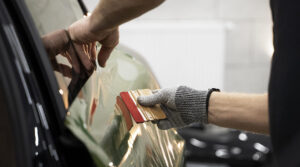
Still not sure what to do? Here’s a simple way to figure it out—take a walk around your car and look at the damage from a few steps back. If it catches your eye every time or bugs you when the light hits it just right, a repair probably won’t cut it.
Here’s what usually helps people decide:
At the end of the day, it comes down to what you want. If the damage is small, and you’re fine with a quick fix, go for it. But if the wrap feels tired, or you want a clean slate, a full rewrap might feel a lot better every time you see your car.
Wraps get beat up—it happens. A small scratch or lifted edge doesn’t mean you need to start from scratch. If the rest of the wrap still looks solid, a quick repair can keep your car looking sharp without spending a fortune. But if things are peeling all over or the color’s faded out, rewrapping just makes more sense.
Best move? Let a shop take a look and give you real advice. At D&A Customs, we’ve seen it all—from tiny fixes to full makeovers. Sometimes, all it takes is one clean patch. Other times, a full rewrap gives your car that fresh, finished look again. Either way, you’ve got options.
A great sticker can do more than just look good—it can grab attention, start conversations, and make a brand feel more personal. Think about a local coffee shop that gives out free stickers with every order. Customers stick them on laptops, water bottles, and notebooks, turning them into little billboards. Bigger brands do the same, slipping stickers into every package to keep their logos in front of customers long after the sale. Stickers don’t just promote a brand—they create connections.
People love stickers. They’re fun, easy to use, and when designed well, they don’t feel like ads. That’s why brands like Apple throw them in with every product—because people actually want to use them. A good sticker ends up on laptops, water bottles, and car bumpers, turning customers into walking (or driving) billboards.
Stickers also last. A digital ad disappears in seconds, but a sticker can stick around for years. According to the Promotional Products Association International (PPAI), 83% of people keep promotional items for over a year, and 76% remember the brand on the product. That’s a lot of long-term exposure for something that costs just a few cents to print.
Stickers can do a lot more than just look cool. Slap one on a package, and suddenly, it feels more personal. Hand them out at events, and people start spreading your brand without even thinking about it.

Next, we’ll break down some of the best ways to use stickers for marketing.
Plain packaging does the job, but it doesn’t make anyone excited. A custom sticker changes that in seconds. Think about a small bakery sealing every bag with a fun logo sticker—it’s a small touch, but it makes the packaging feel special. People notice details like that.
Stickers are also perfect for quick updates. Instead of printing new packaging for every promotion, brands can slap on a “New Flavor” or “Limited Edition” sticker. It’s simple, cheap, and gets the message across without wasting old materials.
And here’s the thing—packaging matters. A 2023 study by Packaging Digest found that 72% of shoppers say packaging influences their buying decisions. Another report by Dotcom Distribution found that 40% of people are more likely to share a product online if the packaging stands out. A cool sticker can be the difference between a package that gets tossed and one that gets posted on Instagram.
Here’s how businesses use stickers to upgrade their packaging:
Stickers can turn a small brand into something people recognize everywhere. Walk into a coffee shop, and you’ll probably see laptop covers covered in stickers. Check out a musician’s guitar case, and you’ll likely find the same. A cool sticker doesn’t feel like an ad—it feels like something worth keeping. That’s why people stick them on their stuff, and that’s why brands use them to get noticed.
Red Bull nailed this strategy years ago. Instead of paying for big billboards, they gave out free stickers to skaters, bikers, and musicians. Those stickers ended up on helmets, ramps, and street signs, spreading the brand without expensive ad campaigns. Smaller brands can do the same by handing out stickers at events, slipping them into orders, or teaming up with artists for unique designs.
Here’s how brands use stickers to get free exposure:
A good event ends, but a great sticker keeps it alive. Festivals, concerts, and sports events hand out stickers because they don’t just get tossed—they end up on water bottles, laptops, and gear. Coachella’s branded stickers pop up everywhere, keeping its name in front of people long after the last performance.
Local businesses and smaller events can do the same. A well-designed sticker makes an event feel bigger and more memorable. It’s a simple way to leave a lasting impression without a huge budget.
Here’s how brands use stickers to make events stand out:
People love free stickers, but only the good ones make it onto laptops, water bottles, and car bumpers. Supreme turned its logo sticker into a must-have, and brands like Vans use stickers to build a loyal following. When a brand gives out something people actually want, customers start promoting it without even realizing it.
Small businesses can do the same. A local coffee shop can throw a sticker in with every order, or a clothing brand can include one in every package. If the design looks good, people will use it.
Here’s how brands turn customers into promoters:
A good sticker isn’t just a logo on a square—it’s something people actually want to use. Simple, bold designs stand out, whether it’s Apple’s clean logo or a streetwear brand’s edgy graphic. The material makes a difference, too. Glossy stickers pop, matte ones feel premium, and holographic designs get attention fast. 81% of people remember brands better when packaging feels high quality, and the same goes for stickers. A flimsy design won’t cut it, but a well-made sticker? That’s the one people keep.
At D&A Customs, we don’t just print stickers—we create ones that get noticed. Whether you need eye-catching promo stickers, sleek branding decals, or custom-cut designs, we make sure they look sharp and last. With high-quality materials and precision printing, our stickers don’t just stick—they leave an impression.
Stickers do more than just look cool—they keep your brand in front of people without feeling like an ad. A great design, good placement, and quality materials turn them into mini billboards that stick around. Whether on a laptop, a water bottle, or a car bumper, the right sticker makes people remember your brand.
At D&A Customs, we make stickers that people actually want to use. Whether it’s for branding, events, or just for fun, we’ll help you create something that stands out. Let’s get your brand in more places—one sticker at a time.
Graffiti and scratches on public property send the wrong message. A school covered in tags or a bus stop with etched glass looks neglected, making the space feel less safe. Cleaning spray paint is a hassle, and replacing damaged glass costs a fortune. Anti-graffiti films solve this problem by adding a clear, protective layer that takes the damage instead. If vandals strike, the film peels off easily, revealing a clean surface underneath. Schools, city buildings, and businesses can keep their spaces looking sharp without spending a fortune on constant repairs.
Anti-graffiti films are thin, clear layers that stick to glass, metal, and other smooth surfaces to stop damage from spray paint and scratches. Instead of cleaning off graffiti or replacing broken glass, workers can peel off the film and put on a new one. It takes minutes instead of hours, saving time and money.
Cities spend millions on graffiti cleanup each year. In the U.S., graffiti removal costs over $12 billion annually. Schools, bus stops, and stores are common targets, making protection important.
Schools, cities, and businesses spend a fortune fixing vandalized surfaces. Graffiti removal costs about $3 per square foot, and replacing a single window can set you back $500 or more. That adds up fast. Anti-graffiti films help stop the damage before it becomes a problem, saving time, money, and frustration.
Here’s why they make sense:
A simple layer of film can make a huge difference, especially in places that get hit with graffiti often. It’s an easy fix that helps schools and cities stay ahead of the problem.

Graffiti sends the wrong message. A school covered in tags looks like no one cares. A bus stop with scratched-up glass makes people feel uneasy. When vandalism sticks around, it invites more of the same. One spray-painted wall turns into a dozen. One scratched window leads to another.
Anti-graffiti films help stop the cycle. If someone sprays paint on a window, the film takes a hit. Instead of leaving the mess for weeks, workers can peel off the damaged layer and replace it in minutes. Studies show that clean, well-maintained spaces discourage vandalism. When schools and public areas look fresh, people respect them more.
Installing anti-graffiti film is simple, and D&A Customs makes sure it’s done right. The film goes directly onto glass or metal, creating a clear protective layer that stops damage before it happens. Most windows take less than an hour to cover, and once the film is on, you won’t even notice it’s there—until it saves you from expensive repairs.
Keeping it clean is just as easy. A little soap and water does the trick, no need for harsh cleaners. If someone scratches or sprays paint on it, no problem. Just peel off the damaged layer and stick on a new one. D&A Customs uses high-quality films designed for quick replacements, so schools and public spaces always look their best without a lot of work.
Not all anti-graffiti films work the same way. We offer different options depending on how much protection a space needs. A school entrance or a high-traffic bus stop might need a stronger film than a quiet office building. The right choice makes a big difference in how long a surface stays clean.
Here’s what to look for:
We can help schools, businesses, and city offices find the best film for their needs. A simple upgrade can save thousands in repairs and keep spaces looking fresh.
Graffiti and scratches don’t just make a place look bad—they send the message that no one cares. Schools want students to feel safe and proud of their environment. Businesses want clean, professional storefronts that attract customers. But without protection, vandalism keeps coming back, and repairs get expensive fast.
Anti-graffiti films help stop the cycle. Instead of replacing a $500 window or spending hours scrubbing off paint, a simple film swap gets the job done in minutes. D&A Customs provides high-quality films that protect against tagging, etching, and other damage. Schools, businesses, and city buildings stay clean, look professional, and save money in the long run.
Running a small business means watching every dollar. Big brands can throw money at ads, but smaller companies need smarter ways to get noticed. The good news? You don’t need a huge budget to attract customers. A well-placed ad, a strong local presence, and creative marketing can bring in business without breaking the bank. This article breaks down strategies that work, with a focus on affordable options that deliver real results.
Throwing money at ads that don’t bring in customers is the last thing a small business needs. The trick is finding advertising that keeps working without draining your budget every month. Some methods eat up cash fast, while others keep your brand in front of people without extra spending. The goal is to put money where it makes the biggest impact.
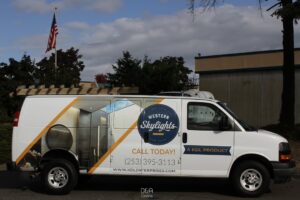
Getting people to notice your business isn’t easy, but a vehicle wrap makes it simple. Instead of paying for ads that disappear after a few days, a wrapped car or truck promotes your brand everywhere it goes—without extra costs. Whether it’s parked outside or driving through town, it puts your business in front of potential customers all day.
A good wrap can:
Studies show that 98% of people notice vehicle advertisements, and 30% base their buying decisions on them. Compared to billboards or online ads that stop working when the budget runs out, a wrap stays in place and keeps working. If you want a cost-effective way to advertise, check out DA Customs’ vehicle graphics to see how a custom wrap can help your business stand out.
Social media is a small business’s best friend. You don’t need a huge budget—just the right content and a little consistency. A single viral post can bring in more customers than a pricey ad, and the best part? It costs nothing to post.
Some easy ways to make social media work for you:
With over 5 billion social media users worldwide, the right strategy puts your business in front of the right people—without draining your budget.
You don’t have to do all the marketing on your own. Partnering with another small business is an easy way to get in front of more people—without spending extra. The right collaboration helps both businesses grow while keeping advertising costs low.
Easy ways to cross-promote:
People trust recommendations from businesses they already like. A good partnership can bring in new customers without spending an extra dime.
There’s no one-size-fits-all approach to marketing. A food truck might get the most attention from a bold vehicle wrap, while a home repair business benefits more from social media. The key is figuring out where your customers are and meeting them there.
A few ways to find the right strategy:
Marketing on a budget doesn’t mean settling for less. It’s about making smart choices that keep your business in front of the right people. If you want an affordable way to get noticed, check out DA Customs for custom vehicle wraps that turn any car or truck into a moving billboard.
Marketing on a budget means making smart choices. A well-placed vehicle wrap keeps your business visible without ongoing costs. Even a smaller solution like custom decals for cars can help brand your vehicle affordably and effectively. Social media and local SEO help customers find you without big ad spends. Partnering with other businesses and getting involved locally builds trust and word-of-mouth. The right mix of strategies brings in customers without draining your budget.
Carbon fiber wraps are a great way to give your car a modern, high-end look without spending a fortune. They’re more than just eye-catching—they help protect your car’s original paint from scratches and minor damage. If you’re considering this upgrade, you probably want to know how long it will last. The lifespan of a carbon fiber wrap depends on the quality of the wrap, how it’s installed, and how you take care of it. At D&A Customs, we’ve worked with countless customers to make sure their wraps not only look great but also stand the test of time.
A carbon fiber wrap is a vinyl material designed to replicate the look of real carbon fiber. It’s a cost-effective way to give your car a high-end appearance without investing in actual carbon fiber, which can cost thousands of dollars. These wraps are used for full-vehicle applications or smaller details like hoods, roofs, and mirrors, depending on the look you’re going for.
When installed and maintained correctly, a carbon fiber wrap provides both style and practicality, making it a popular choice for car enthusiasts.
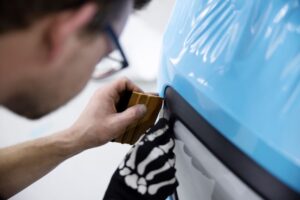
A carbon fiber wrap can last 5 to 7 years, sometimes even longer, if you take care of it. The key to getting the most out of your wrap is all about the quality of the vinyl, how it’s applied, and how you treat your car afterward. A cheap wrap or a bad installation job can leave you with peeling edges or faded spots within a year or two.
If you want cool vehicle wraps that turn heads and stand the test of time, the right materials and experts like D&A Customs make all the difference.
Taking care of your carbon fiber wrap is easier than you might think, and it’s worth the effort. A little attention to maintenance can make the difference between a wrap that fades in a few years and one that looks fresh for the long haul. On average, a well-maintained wrap lasts 5 to 7 years, but with the right care, you can stretch that even further.
If you want your vehicle wrap to keep turning heads, small habits like these can go a long way. Plus, caring for your wrap isn’t just about looks—it’s also about protecting your investment and keeping your car in top shape.
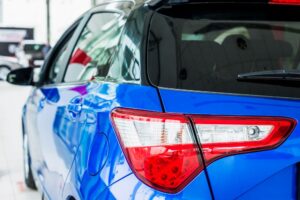
Even with proper care, a carbon fiber wrap won’t last forever. Over time, you might notice the deep, textured finish starting to fade or lose its shine, especially if your car spends a lot of time in the sun. Peeling edges and bubbling are other common signs that your wrap has run its course, and they’re hard to ignore once they start showing up. Cracks or scratches can also appear as the wrap ages, particularly if it’s been through tough weather or hasn’t had enough protection.
When these signs start to pop up, it’s a good idea to consider replacing the wrap. Your car will look sharp again, and a fresh wrap will protect the paint underneath. If you’re ready to give your vehicle a new look, D&A Customs has you covered with expert installation and top-quality materials.
Getting a carbon fiber wrap is about more than just making your car look good—it’s about getting it done right so it lasts. At D&A Customs, we focus on quality and precision with every project. We don’t just throw on a wrap and call it a day. Instead, we take the time to make sure every edge is smooth, every curve is covered, and the wrap looks flawless.
We use only top-tier vinyl that resists fading, peeling, and cracking, even under tough conditions. Our team has experience working with all kinds of vehicles, so we know how to handle tricky areas like mirrors and bumpers. Whether you want a glossy finish that stands out or a matte look that feels sleek and modern, we help you pick the right style for your car.
Choosing D&A Customs means trusting a team that pays attention to the details. Your car will look sharp and stay protected, giving you a wrap you’ll like for years.
Thinking about changing up your car’s look? You’re probably wondering whether a fresh paint job or a vinyl wrap is the better option. Maybe you want something bold and eye-catching, or you just need to cover up some wear and tear. Each choice has its own perks and challenges, from how much it costs to how long it lasts. Let’s break down what makes wraps and paint jobs different, so you can pick what’s best for your car and your budget.
Wrapping your car means covering it with a thin vinyl film that sticks to the surface. This film can be pretty much any color or design you can think of—matte black, glossy red, or even a funky pattern. On the other hand, painting involves spraying layers of paint right onto the car and sealing it with a clear coat for that smooth, shiny finish.
Wraps are great if you want a new look without committing forever since you can peel them off when you’re ready for a change. Paint jobs, though, are more permanent and can give your car that factory-fresh vibe. Still, with D&A Customs, you can explore premium wrap options designed to fit your style and protect your car without breaking the bank.
Let’s talk about differences more.

When deciding between wrapping and painting your car, it’s essential to consider factors like cost, durability, and maintenance. Here’s a comparison to help you make an informed choice:
| Factor | Car wrap | Car paint |
| Cost | – Initial investment. Wrapping a car typically costs between $1,500 and $5,000, depending on vehicle size and design complexity.
– Customization. Complex designs may increase the price. |
– Initial investment. A professional paint job can range from $1,000 to over $7,000, influenced by paint quality and labor.
– Customization. Custom paint jobs with intricate designs can significantly increase costs. |
| Durability | – Lifespan. High-quality wraps last about 5 to 7 years with proper care.
– Protection. Wraps shield the original paint from UV rays and minor abrasions. |
– Lifespan. Quality paint jobs can last up to 10 years or more with regular maintenance.
– Vulnerability. Paint is more susceptible to chips, scratches, and fading over time. |
| Maintenance | – Care requirements. Wraps require gentle hand washing and avoidance of harsh chemicals to maintain appearance.
– Repairs. Damaged sections can be replaced without redoing the entire wrap. |
– Care requirements. Painted surfaces need regular washing, waxing, and occasional polishing to preserve their look.
– Repairs. Touch-ups for chips and scratches can be more involved and costly. |
| Customization | – Flexibility. Offers a wide range of colors, finishes, and designs, including matte, gloss, and textured options.
– Reversibility. Wraps can be removed to revert to the original paint. |
– Flexibility. While offering numerous color options, achieving certain finishes (like matte or metallic) can be more challenging and expensive.
– Permanence. Paint changes are long-lasting and not easily reversible. |
| Application Time | – Installation. Typically completed within 1 to 3 days, depending on complexity.
– Downtime. Shorter vehicle downtime compared to painting. |
– Application. Can take several days to weeks, considering multiple coats and drying times.
– Downtime. Longer periods without vehicle access. |
| Resale Value Impact | – Preservation. Protects original paint, potentially enhancing resale value if the wrap is well-maintained.
– Buyer preference. Some buyers may prefer the original paint over a wrap. |
– Perception. A high-quality paint job can improve resale value, especially if it matches the original color and is in good condition.
– Wear and tear. Visible paint damage can negatively affect resale value. |
Your choice between wrapping and painting should align with your budget, desired aesthetic, and how you plan to maintain your vehicle over time.
Choosing between a wrap and a paint job comes down to what you need from your car’s makeover. Let’s break it down, especially if you’re leaning toward the benefits of wraps.
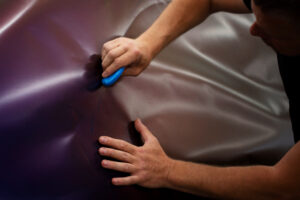
So, if you’re after a cool new look, some added protection, and the option to switch things up later, wraps are hard to beat. But if you’re all about that timeless, factory-perfect shine, the paint might still win you over. Either way, D&A Customs has you covered with expert advice and top-tier wrap services to make your car look its best.
It’s easy to think that once you tint your windows, you’re set for life. After all, tinted windows look great, keep the heat out, and make driving more comfortable. But here’s the thing—window tints don’t last forever. Over time, the sun, weather, and daily wear take their toll. How long your tint lasts depends on the type of film you choose, the quality of the installation, and how you care for it. In this article, we’ll break down what really affects a tint’s lifespan, how long each type of film holds up, and the signs that it’s time for a replacement.
The lifespan of window tints comes down to a few simple things, and not all tints are made to last the same.
If you choose the right film and take care of it, window tints can look great and do their job for many years. It’s worth getting the best option up front so you don’t have to replace it sooner than expected.
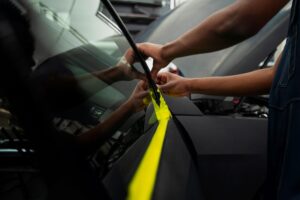
Not all window tints age the same, so choosing the right one makes a big difference.
If your car spends all day in the sun, even high-quality tints won’t last forever. But with ceramic film and a professional installation, you’ll get a decade or more of protection and great looks.
Window tints don’t just quit on you all at once—they give you hints that it’s time for a replacement. Here’s what you’ll notice:
If any of this sounds familiar, it’s time for an upgrade. Damaged tint isn’t just an eyesore—it stops doing its job, and that’s a problem.
Keeping your window tints in good shape doesn’t take much, but it makes a big difference. First off, start with a high-quality film like ceramic or metalized options—they handle heat and UV rays much better than the cheap stuff. Then, get it installed by professionals who know what they’re doing. A good install means no bubbles, no peeling, and a tint that stays put for years.
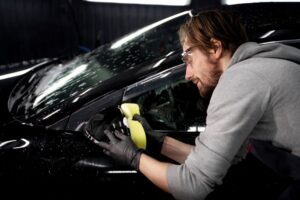
Once your tint’s on, treat it right. Use soft microfiber cloths and mild, ammonia-free cleaners when you’re wiping down the windows. Harsh chemicals or rough rags can scratch the film and wear it out faster. And if you can, park in the shade or in a garage. Less sun means less fading, so your tint keeps looking sharp.
With just a little care, your tints will look good, block heat, and last way longer than you’d expect.
At D&A Customs, we know window tinting isn’t just about darkening your windows—it’s about quality, durability, and getting it right the first time. That’s why we use premium-grade films that don’t fade, bubble, or peel after a summer in the sun. Whether you’re dealing with scorching heat or harsh winters, our tints hold up and keep doing their job year after year.
Installation is where a lot of shops cut corners, but not us. Our team knows the tricks to avoid common issues like air bubbles, wrinkled edges, or peeling corners. We take our time because we know you’ll be looking at those windows every day, and we want them to look flawless.
We also don’t believe in one-size-fits-all solutions. Maybe you need a ceramic film that blocks heat for long drives, or maybe you just want something budget-friendly that looks clean and professional. Either way, we’ll walk you through the options and help you pick what’s right for you.
Our goal is simple: give you tints that look sharp, hold up over time, and make you glad you chose D&A Customs.