By 2 p.m. on a sunny day, the blinds are down across half the office. The lights are on. Nobody can see the view they’re paying rent for. This is the trade tenants make on sunny afternoons in Seattle and Bellevue office buildings: block the sun, or keep the window.
Property managers hear the same complaint every summer. Tenants want cooler rooms and less glare, but they also want daylight and a usable view. Blinds fix one problem by causing another: comfort at the cost of light. Window film takes a different path. It treats the glass itself, not the room behind it.
This article looks at how each option works. It also covers what U.S. Department of Energy data says about the real source of the problem, and where blinds still make sense despite film’s advantages.
How Each Option Actually Works
Blinds and film fix heat and glare in different places. Blinds sit inside the room, after sunlight has already passed through the glass and turned into heat. By the time the slats close, that heat is already inside the space, warming the air near the window.
Window film works at the glass, before that happens. A film like 3M’s Prestige Series goes directly on the window and blocks infrared light and UV rays before they get into the building. The room stays brighter because the glass stays clear, and less heat gets in to begin with.
This difference matters more than it sounds. A tenant who closes the blinds trades daylight for comfort. A tenant with film gets both, because the film works on every square foot of glass, all day, without anyone touching a cord.
The DOE Data: Why the Glass Itself Is the Real Problem
The U.S. Department of Energy tracks where building energy actually goes, and windows use more of it than their size would suggest. The department’s own numbers show windows account for roughly 10% of a building’s energy use on their own. But they also affect the heating, cooling, and lighting systems that together use about 40% of a building’s total energy.
That 40% covers the three systems most affected by how much heat and glare come through the glass. When those systems work harder because untreated glass lets in too much heat, the building’s energy bill shows it, no matter what’s happening inside the room. Blinds don’t change what happens at the glass. They only deal with the result after it’s already there.
This is why it helps to fix the window itself, not just the room around it. Film cuts the heat and UV that reach the inside of the glass before it becomes a room problem. That’s closer to the real source the DOE points to.
Heat and Glare Performance, Side by Side
Numbers make this easier to judge than words alone. The table below compares 3M Prestige Series film to what blinds typically deliver in the same office.
| Factor |
3M Prestige Series film |
Standard blinds |
| Infrared heat blocked |
Up to 97% (measured 900-1000nm) |
0%, heat already inside the room |
| Total solar heat blocked |
Up to 60% |
Varies with slat angle and how often they’re closed |
| UV rays blocked |
Up to 99.9% |
Minimal, gaps and edges still let UV through |
| View while active |
Full view kept |
Blocked when closed |
| Coverage |
Constant, all day, every window |
Only when manually closed |
3M states the Prestige Series blocks up to 97% of infrared light, up to 60% of total solar heat, and up to 99.9% of UV rays. It does this without a metal layer or a tinted look. That matters in South Lake Union towers and Bellevue office parks, where the building’s outside look is part of what tenants pay for.
Blinds don’t have a rejection number, because they don’t block anything at the source. They cover the window instead. That cuts glare in the room, but it does nothing about the heat that already came through the glass. The blind material even gives off some of that heat itself.
Maintenance: Why Film Needs Less Work
Blinds depend on someone using them the right way, every day, on every window. In practice, that rarely happens. Cords tangle, slats bend, tenants forget to close them before lunch, and a west-facing conference room ends up baking by 3 p.m. because nobody adjusted anything.
Film doesn’t have this problem, because there’s nothing to operate. Once it’s installed, it works the same way on day one and in year fifteen. 3M backs it with a warranty. Property managers don’t need to train tenants, swap broken cords, or handle complaints that “the blinds still don’t work” when the real issue is that nobody closed them.
This steady performance often decides the choice for multi-tenant buildings. A leasing team can promise steady comfort with film. With blinds, comfort still depends on what tenants do, and a property manager can’t control that.
Where Blinds Still Make Sense
Film isn’t the right answer for every case. A fair comparison should say so. Blinds still make sense in a few situations, even in a building that already has film installed elsewhere.
- Full blackout needs. Conference rooms with projectors or video calls need full darkness on demand, and film alone can’t do that.
- Night privacy. Film cuts down how well people can see in during the day, but it won’t hide a lit room at night the way closed blinds do.
- Tight budgets. Storage rooms, back offices, or spaces set for renovation may not be worth the upfront cost of film.
- Already strong glass. Buildings with newer low-E, high-performance glass may see a smaller gain from film and can lean on blinds for the rest of the glare.
For most Seattle-area office buildings, film and blinds often work together instead of competing. Many buildings use film on all the glass for heat and UV control, then keep blinds only in rooms that need blackout sometimes.
Cost Over Time: What You Pay Now vs. Over the Years
Blinds cost less to put in at first, which is why they’re the default choice in most build-outs. But that first price doesn’t show the full cost of owning them. Cords fray. Slats warp in direct sun. Motorized systems need new parts over time. A property manager pays for all of this again over the life of a lease.
3M backs the Prestige Series with a 15-year warranty on professional commercial jobs. The cost is fixed at install, with no ongoing repair costs added on. Over a 15-year hold, that shifts the comparison from “which is cheaper to buy” to “which costs less to own.”
If tenant turnover already means blinds get replaced or fixed between leases, film’s fixed cost and long warranty often work out better. For a shorter hold, or for rooms that need blackout, blinds still make good financial sense.
Ready for a Direct Comparison?
The right answer depends on which windows, which way they face, and which tenants complain the most. DA Customs, an authorized 3M dealer, offers a free glare and heat check. We compare how your blinds perform now against what the Prestige Series film could do, room by room. Schedule your free check and get a straight answer on what actually fixes the afternoon heat in your building.
Seattle Public Schools students in grades 1 through 12 return to class on Wednesday, September 2, 2026, according to the district’s official calendar. Count backward from that date, and July looks like the last stretch with any real breathing room for a security window film project.
A site assessment, a quote that clears district procurement, phased access across a campus, and sealant work that needs time to set before doors reopen: that sequence eats an eight-week runway fast. If your district hasn’t scheduled a walkthrough yet, this is the moment to start, not the week before buses roll.
Why Summer Break Is the Realistic Installation Window
Security window film installation means technicians working room by room with ladders, tools, and staging carts through hallways and classrooms. That’s manageable in an empty building. It’s disruptive, and in some cases unsafe, in a full of students and staff.
On the school jobs we run each summer, the building itself sets the schedule more than anything else does. Custodial teams need access for their own deep-clean and maintenance work. Fire marshals and facilities directors often want final walkthroughs before staff returns for in-service days, which typically land a week or two ahead of students. Once those in-service days start filling the calendar, glass work has to be finished, not just started.
That’s why “install it sometime this summer” isn’t specific enough for a multi-building district. Every week of summer break carries other competing projects, like roofing, HVAC, or flooring, and window film crews need a confirmed date, not a placeholder.
What “Booking Now” Actually Buys You
Booking a project now, in July, buys time for three steps that actually determine whether the film is on the glass before the first bell. Here’s what each one covers and why the order matters:
- Glazing assessment. We walk the campus, identify which glass is tempered versus annealed, check frame condition, and flag any openings that need the 3M Impact Protection Attachment (IPA) Sealant alongside the film rather than film alone.
- Procurement paperwork. The assessment turns into a real, line-itemed quote your business office can run through purchasing, instead of a rough estimate that stalls in a board meeting.
- Phasing and cure time. On a single building, that might mean finishing entry doors and ground-floor classrooms in one pass and higher floors in a second. On a multi-building district, phasing usually means sequencing by which schools have the earliest in-service dates.
Sealant needs uninterrupted time to bond properly, so projects that start in the final two weeks of summer carry the highest risk of crews working around move-in furniture and freshly waxed floors, or missing the deadline outright. Booking in July gives all three steps room to happen in order.
Washington’s 2025–27 Safety Funding: What’s Actually Available Right Now
Washington’s 2025–27 capital budget set aside two separate pools of state money for K-12 health-and-safety facility work, apart from any federal grant program. The Legislature appropriated $15,000,000 for Urgent Repair Grants, capped at $600,000 per district over a three-year period, and $11,000,000 for an Emergency Repair Pool, according to the Office of Superintendent of Public Instruction.
Timing matters here, and it’s worth being direct about it. The two programs don’t work the same way, and knowing the difference saves a district from chasing a door that’s already closed. Here’s how they compare:
| Program |
2025–27 appropriation |
Per-district cap |
Application status |
Best fit |
| Urgent Repair Grant (Form Package 502) |
$15,000,000 |
$600,000 per 3-year period |
Closed November 12, 2025, for this cycle |
Planned facility repairs for districts that applied before the deadline |
| Emergency Repair Pool |
$11,000,000 |
No stated per-district cap |
Rolling requires a school board emergency declaration |
Unexpected, imminent health and safety hazards |
Districts that didn’t apply to the Urgent Repair Grant by the November 2025 deadline won’t have access to this specific pool for a 2026 project. The next opportunity will come with a future budget cycle. The Emergency Repair Pool stays open longer, but it’s meant for unexpected, imminent hazards rather than a planned security upgrade, so it isn’t a reliable substitute for most film projects.
In practice, that means most districts installing security film this summer are paying out of existing capital or safety budgets rather than a new state grant. We still put together the documentation, glass specs, and cost estimates districts need for the next OSPI cycle or for a local bond or levy request, even when this round’s Urgent Repair Grant isn’t available. It’s worth having that paperwork ready before the next window opens rather than scrambling when it does. We’ve also covered federal grant programs that can apply to security film separately in our earlier piece on federal funding for school safety film.
What the 3M Scotchshield Ultra Series + IPA Sealant Actually Does (and Doesn’t Do)
The 3M Scotchshield Safety & Security Window Film Ultra Series, paired with the 3M Impact Protection Attachment (IPA) Sealant, is built to strengthen weak entry points and help delay intruders, giving staff and students extra response time during a break-in attempt. The film holds shattered glass together instead of letting it scatter, which also matters during storms, seismic events, and accidental breakage.
3M is explicit about what this system does and doesn’t do, and so are we. Here’s the honest breakdown we give every district up front:
- What it does: helps delay intruders and adds response time, holds shattered glass together instead of letting it scatter, and helps mitigate flying glass shards during storms, seismic events, and accidental breakage.
- What it doesn’t do: stop a bullet, stop an intruder outright, or make the surrounding frame and glass condition irrelevant.
Whether the delay is meaningful for a specific opening depends on the glass type, the frame condition, and whether the IPA Sealant is applied correctly to the surrounding frame. That’s exactly why the assessment step isn’t optional.
Warranty coverage for these systems runs between 7 and 15 years, depending on the specific film and sealant combination installed. Only a 3M Authorized Window Film Dealer can carry that warranty and install the sealant to spec. As a 3M-authorized dealer ourselves, that certification is what lets us warranty the system, not just the film. That distinction matters if a district is comparing our quote against a general contractor who isn’t 3M-certified.
Which Openings to Prioritize First
Not every pane of glass on a campus carries the same risk, and budgets rarely stretch to cover a whole building in one phase. Ground-floor classroom windows, entry doors, and the sidelights next to those doors are almost always where we start, because they’re the openings closest to grade level and the most likely points of forced entry.
- Entry doors and their sidelights, the most common access point, and often glass that wasn’t originally specified with security in mind
- Ground-floor classroom windows, especially on portables or older wings where the glazing predates current security standards
- Front office and reception glass, since that’s typically the first interior barrier after a breach
Prioritizing these openings first means a district gets meaningful protection on its highest-risk glass even if the full-building project has to phase across two or three summers. From there, second-floor classrooms and less exposed interior glazing can follow once budget allows.
What a Phased, Multi-Building District Project Looks Like
A district with six or eight buildings rarely tackles all of them in one summer, and trying to force that timeline usually means rushed work somewhere. We typically sequence a phased project around each building’s in-service date, starting with whichever schools bring staff back earliest.
Rather than finishing one school completely before starting the next, we spread the priority openings across every building in the district first. A typical sequence looks like this:
- Year one: entry doors, sidelights, and ground-floor classroom glass at every building in the district
- Year two: front office and reception glass, plus any remaining ground-floor openings
- Year three: second-floor classrooms and lower-priority interior glazing
That approach means every campus gets its highest-risk glass covered in year one, even if second-floor classrooms wait until year two or three. It also spreads the cost across multiple budget cycles instead of requiring one large capital outlay.
Coordinating that kind of schedule takes a facilities calendar early, not a phone call in August. If your district is weighing a multi-building project against this fall’s start date, that conversation needs to happen this month.
With eight weeks left before the first bell, the districts that book now are the ones who’ll have their entry glass finished, not half-taped-off, when students walk in on September 2. Reach out to D&A Customs for a free glazing assessment and a phased project proposal built around your district’s actual return date. Get in touch here before the summer window closes.
Open-plan offices and glass-heavy medical spaces are solving the privacy problem the wrong way. Glass walls get torn out and replaced. Frosted glass gets specified during construction and locked in for good. Blinds go up and never come back down. Each fix is either expensive, permanent, or both.
3M FASARA works differently. You apply it to glass that’s already there, choose exactly how much privacy you want, and remove it cleanly if the space changes. Here’s what it does, and where it fits in Seattle-area offices and medical spaces.
The glass privacy problem in modern offices and medical spaces
Open floor plans put glass everywhere: conference rooms, HR offices, reception areas, collaboration spaces. It looks great in a listing photo. It’s a problem the first time someone has a performance review or a patient consultation with a hallway full of people walking past.
Healthcare has the same issue in a higher-stakes form. Waiting areas, consultation rooms, and pharmacy counters often sit behind clear glass, which means anyone nearby can see who’s there and sometimes what’s being discussed. HR offices carry a similar weight, since compensation talks, disciplinary conversations, and legal matters don’t belong in a fishbowl.
The usual fixes fall short. Frosted glass is permanent and has to be specified before construction. Blinds defeat the purpose of having glass walls in the first place, and someone has to remember to close them. Partitions cost real money and take the space out of commission during installation.
What 3M FASARA actually is
3M FASARA isn’t frosted glass. It’s a film applied directly to glass that already exists, available in over 100 designs from 3M: frosted, gradient, linen, geometric, and textured finishes among them.
Privacy level is a real choice, not a guess. On the frosted end, patterns like 3M FASARA Lausanne let through roughly 84% of visible light while still obscuring the view. On the opaque end, near-blackout options bring that down to around 19%. That range means you can specify subtle diffusion for a collaboration space or full visual screening for a conference room, without changing products or vendors.
FASARA also blocks at least 99% of UV light, which matters for anything near a south- or west-facing window where fading is a concern. There’s no hardware involved, no special maintenance routine, and no permanent change to the glass itself.
How to choose the right privacy level for each space
Not every glazed surface needs the same treatment. The right call depends on what happens in the room and who’s walking past it.
- Conference rooms: A mid-level frost, roughly in the 50–70% VLT range, shows that the room is occupied without revealing who’s in it or what’s on the screen.
- HR offices and consultation rooms: Higher opacity, closer to 20–35% VLT, keeps documents and body language off-limits to anyone passing by.
- Reception and lobby glass: A light gradient or pattern adds branding and visual interest without blocking the view entirely.
- Clinic waiting areas and exam corridors: Near-opaque coverage protects patient dignity in spaces where people are often at their most exposed.
Match the pattern to the room’s actual use rather than picking one finish for the whole office. A conference room and an HR office rarely need the same level of coverage.
Healthcare applications: what clinics and medical offices need
HHS guidance on the HIPAA Privacy Rule requires covered entities to keep administrative, technical, and physical safeguards in place to limit incidental disclosure of patient information. That’s the kind of accidental exposure that happens when a passerby can see into a consultation room. Visual privacy on glass is one of the physical safeguards that supports that standard. It doesn’t make a space HIPAA compliant on its own, since compliance covers policies, training, and technical controls too, but it’s a practical step toward the physical safeguard the guidance describes.
We installed 3M Prestige 40 exterior film for One Medical in Puyallup, so we’ve worked directly with a healthcare provider’s glass requirements, including scheduling installation around active patient hours. That project used a solar control film rather than FASARA, but the same install discipline applies: no disruption to a working clinic, done in stages if the schedule requires it.
FASARA is also removable without damaging the underlying glass, which matters for clinics operating in leased space where the landlord restricts permanent modifications.
HR offices and sensitive workplace spaces
Performance reviews, compensation conversations, and disciplinary meetings don’t belong on display. An HR office with floor-to-ceiling clear glass turns every one of those conversations into something the rest of the floor can half-see, even if they can’t hear it.
FASARA solves this without asking a company to give up the glass. Keep the light, keep the open feel of the space, and add the opacity where it actually matters, usually just the panels facing the main floor, not the whole room.
Conference rooms and collaboration spaces
Glass-walled conference rooms have two recurring problems: presentations visible from the hallway, and confidential video calls that anyone walking by can watch on screen. Neither is a hypothetical in a South Lake Union office with heavy foot traffic between desks.
A mid-opacity FASARA finish addresses both without turning the room into a box. Custom-cut FASARA can also carry a logo or graphic element on the glass, which turns a privacy fix into a small branding opportunity at the same time.
FASARA in leased Seattle and Bellevue offices
Most commercial leases require tenants to restore the space to its original condition on exit, which makes permanent glass modifications a hard sell to a landlord. FASARA can be applied to existing glazing and removed without affecting the underlying glass, so approval is usually simpler than it would be for etched or replaced glazing.
That flexibility matters most in Seattle’s leased office market, in South Lake Union, downtown Bellevue, and First Hill, where tenants often don’t own the building and need changes that reverse cleanly if the lease ends or the layout changes.
What a FASARA project looks like with DA Customs
A FASARA installation moves through a few clear stages, starting with a look at the actual glass involved.
- Consultation: We measure the glazed area and talk through what each space needs: full privacy, partial screening, or something closer to decorative.
- Design review: You pick from the pattern catalog, with custom cutting available for logos or specific graphic elements.
- Installation: Most single-office applications take about an afternoon, with no construction and no extended downtime.
As a 3M certified dealer, our installation keeps the FASARA warranty intact. Removable film applied by an uncertified installer can damage the glass on removal and void the manufacturer’s warranty in the process.
Request a decorative film design consultation. We’ll bring the pattern catalog to your office, assess your glass, and give you a specific recommendation before you commit to anything. Contact D&A Customs or call (425) 633-6288.
Retail glass has one job. It invites customers in while keeping the business protected. When it fails, it fails fast. A smash-and-grab on a busy Seattle sidewalk can take under a minute. Security window film does not make glass unbreakable. But it changes the math enough to matter, and that difference is worth understanding before you decide if it’s right for your storefront.
Why Seattle retail glass is under real pressure
Retail theft is not an abstract risk in this city. In Seattle’s Chinatown-International District, the CID Small Business Relief Team, led by the Seattle Chinatown International District Preservation and Development Authority (SCIDpda), ran a three-year Window Security Film Project from 2022 through 2024. Across three rounds of work, local contractors installed security film on 103 storefronts combined and replaced broken glass or doors for 46 businesses. SCIDpda described transparent security film as one of the most affordable and least disruptive ways to harden a storefront without covering it in plywood.
That program was built around one neighborhood, but the pressure it responded to is citywide. Corridors like Belltown, Capitol Hill, and the Pike Place Market area all share the same trait: ground-floor glass facing heavy foot traffic, day and night. Transparent storefronts are good for business. They’re also the first thing a criminal looks at.
What happens when standard glass breaks
Standard annealed or tempered glass fails all at once. One solid hit opens a hole large enough to reach through, and the entire event is over in seconds. The cost rarely stops at the stolen merchandise. Add emergency board-up, glass replacement, lost operating hours, an insurance claim, and the unsettled feeling staff and customers carry into the store the next day.
The National Retail Federation’s Impact of Retail Theft & Violence 2025 study found retailers reported an 18% increase in the average number of shoplifting incidents in 2024 compared with 2023. That trend line is why more Seattle retail owners are looking at glass as a security gap, not just a design feature.
What security window film actually does (and what it doesn’t)
Security window film is a thick, multi-layer polyester or polyurethane film applied to the interior side of glass. When the glass is struck, the film holds the fragments together instead of letting them scatter. That single property changes the sequence of a break-in. Instead of one clean hit opening a hole, an intruder has to strike the same spot repeatedly, and each extra second works against them.
Here’s what matters most: 3M is direct about the limits of this product. According to 3M’s own product documentation, security window films may reduce the impact of flying glass shards and can help delay intruders under certain conditions, but they do not prevent property damage, injury, or death, and they are not bulletproof or designed to stop an intruder outright. We tell every retail customer the same thing. The value of security film is delay and deterrence, not a guarantee. That honesty is part of what makes the recommendation trustworthy.

3M Scotchshield: how it differs from basic safety film
Not every security film performs the same way, and thickness alone doesn’t tell the full story. 3M’s Scotchshield lineup gives retail owners a range of options depending on risk level and budget.
| Series |
Construction |
Thickness |
Best for |
| Safety Series (S40, S70, S140) |
Single-layer polyester |
4 to 14 mils |
Everyday protection against accidental breakage and lower-risk glass |
| Ultra Series (S800) |
Micro-layered polyester |
8 mils |
Higher-risk storefronts, schools, government buildings |
| Scotchshield S2400 |
Polyurethane |
Varies by application |
Maximum security priority, paired with the IPA Sealant |
All three options stay optically clear, so merchandise displays and window branding stay visible. For any of them, 3M requires the IPA Sealant for break-and-entry and windstorm applications. The sealant anchors the film to the window frame instead of just the glass, which is what turns a “harder to break” pane into one that stays in the opening even after repeated impact.
Which Seattle storefronts benefit most
Not every retail space carries the same level of glass risk. A quick self-assessment helps narrow down where film makes the biggest difference.
- Ground-floor retail with large display windows facing a sidewalk or parking area
- Jewelry, electronics, and pharmacy locations, where merchandise value per square foot is high
- Restaurant glass fronting busy corridors with late-night foot traffic
- ATM vestibules and financial storefronts with street-level glass
- Any location that has already had a break-in attempt or sits in a high-traffic retail block
Businesses in more than one of these categories are usually the ones that see the clearest return from a security film installation.
What installation looks like for a working retail business
A common concern from retail owners is closure time. In practice, security film installation is one of the least disruptive upgrades a storefront can make. Most jobs run during non-operating hours or overnight, and there’s no glass replacement, no demolition, and no structural work involved.
We schedule around inventory counts and seasonal peaks whenever possible, and a straightforward storefront can usually be completed in a single visit. A site assessment beforehand tells you exactly what to expect: which panes need coverage, how long the job takes, and what the film specification should be for your risk level.
How to evaluate whether security film is right for your location
Before requesting a quote, it helps to have a few answers ready. How much street-level glass does your storefront have? Has the location had a break-in attempt before? What’s the approximate value of merchandise near the entry glass? A professional assessment builds on those answers, walking the perimeter, checking glass type and frame condition, and recommending the film tier that matches your actual exposure rather than a one-size-fits-all package.
For a deeper look at how security film compares with standard tint, our earlier breakdown of security film vs. standard window tint covers the technical differences in more detail.
Why DA Customs for this project
We’re a certified 3M Authorized Dealer, which means the warranty on your film comes directly from 3M, not from an installer who may or may not still be in business in five years. We serve Seattle, Bellevue, Tukwila, Kirkland, Redmond, and Renton, and we’ve installed 3M security and safety film on storefronts, offices, and government buildings across the region. That certification also matters for performance: an uncertified installation can void the manufacturer’s warranty and, in some cases, reduce how well the film actually performs when it’s tested by an impact.
Ready to find out where your storefront stands? Schedule a free storefront security assessment with DA Customs. We’ll walk your glass, evaluate your risk, and recommend the right 3M film specification for your budget. No pressure, no generic package.
When a property manager asks whether window film is worth it, the real question is different. How long until the money comes back, and what does the return look like at year five and year ten? We get this question on almost every commercial bid we quote. So this article skips the vague estimates. We walk through the variables that decide payback speed, and what Puget Sound building owners should actually expect.
We are a 3M certified dealer based in Tukwila and Bellevue. We quote these projects, install the film, and stand behind the warranty. That is the lens here.
What determines payback speed — the four variables
No two buildings pay back at the same rate. The number depends on your glass, your building, and the film you choose. Before you trust any payback estimate, check it against these four factors. A good installer will measure all of them before quoting you a return.
- Size of glazed area. Payback scales with the square footage of glass. A building with a full curtain wall has more savings potential than one with punched windows.
- Current glass performance. Single-pane glass has the most to gain. Older double-pane and existing low-E glass already block some heat, so the film adds less.
- Building orientation and climate zone. Seattle sits in DOE Climate Zone 4C. West- and south-facing glass drives most of the cooling load here.
- Film selection. Solar control film addresses summer heat. Low-E film like 3M Thinsulate works year-round, which changes the math in our climate.
When we run an assessment, these four inputs drive the estimate. If someone gives you a payback number without asking about them, the number is a guess.
What the U.S. Department of Energy says about window film
The strongest case for window film does not come from manufacturers. It comes from federal energy research. DOE research has identified window film as one of the fastest-payback building energy upgrades in many commercial applications.
The DOE puts the baseline payback at roughly three years. Building owners can save as much as 19 kWh per square foot of glass in certain building types and climates, which 3M frames as $1 to $2 in annual energy savings per square foot of film. Across the industry, typical commercial payback runs 3 to 7 years before any utility rebates apply.
Why the range? Because of the four variables above. A heavily glazed building with old single-pane glass stands near the fast end. A newer building with high-performance glazing lands more slowly. The DOE three-year figure is a strong starting point, not a promise for every building.
Year-round framing for the Pacific Northwest
Most window film articles focus on summer cooling. In Seattle, that misses half the value. Our climate is mild but variable, with cold, wet winters that run long. Film that only fights summer heat leaves money on the table.
In summer, solar control film cuts heat gain and glare on west- and south-facing glass. That reduces the cooling load during the afternoon peak. In winter, Low-E film does the opposite job. It reflects interior heat back into the room instead of letting it escape through the glass.
This matters more than people expect. Nearly 40% of heating loss in commercial buildings happens through windows, according to DOE data cited by 3M. A single-pane window upgraded with 3M Thinsulate film performs close to a double-pane window, improving its U-value by up to 40%. For a Puget Sound building, that turns film into a 12-month investment, not a summer fix.
Sample scenarios by building type
Numbers land better with context. The ranges below show how payback shifts by building type. Treat them as illustrative. Real results depend on an on-site assessment of your glass and orientation.
| Building type |
Glass situation |
What drives the payback |
| Mid-size Bellevue office (single-pane or older double-pane) |
Large west-facing glazed area |
High cooling load reduction; faster payback |
| Pike Place or Capitol Hill retail storefront |
Street-level display glass, high foot traffic |
Solar control plus comfort; moderate payback |
| Medical clinic |
Mixed glazing, privacy and UV needs |
Combined value beyond energy; comfort and UV speed the case |
Illustrative payback examples for Puget Sound buildings
The examples below are for illustration only. Actual payback depends on glass type, orientation, utility rates, building occupancy, and film selection. Seattle and Bellevue also have higher labor and energy costs than many U.S. markets, which can affect both project cost and potential savings.
| Example Building |
Glass Area |
Film Type |
Illustrative Payback |
| Bellevue tech office |
4,000 sq ft |
3M Prestige 70 |
3–5 years |
| Seattle medical clinic |
2,500 sq ft |
3M Prestige 40 |
4–6 years |
| Capitol Hill retail storefront |
1,200 sq ft |
3M Prestige Series |
4–7 years |
| Older office with single-pane glass |
3,500 sq ft |
3M Thinsulate |
3–5 years |
How window film compares to the alternatives
A property manager weighing window film usually has other options on the table. Window replacement, HVAC upgrades, or interior blinds all promise comfort. Here is how film stacks up against each.
Against window replacement, film costs a fraction of the price. The DOE ranks film among the fastest-payback energy upgrades, while full window replacement carries a much higher upfront cost and forces tenant disruption. Film requires no structural work and no glass removal.
Against an HVAC upgrade, film does not compete. It complements. Film reduces the cooling load coming through the glass, so the HVAC system handles less. We tell clients to fix the building envelope before sizing up mechanical systems, because oversizing HVAC to fight solar gain wastes capital.
Against blinds and shading, film works without blocking the view or requiring daily management. Blinds get pulled down and stay down, which defeats the point of having glass at all.
ENERGY STAR and LEED — secondary financial value for commercial buildings
Energy savings are the obvious return. For Class A and Class B buildings, there is a second financial layer that property managers in competitive markets care about. Window film contributes to recognized building performance standards.
3M Window Films can improve a building’s ENERGY STAR Portfolio Manager score, the benchmark used to compare buildings of similar size and rate them on a 1-to-100 scale. A higher score helps with tenant attraction and refinancing in a market like Bellevue or downtown Seattle. Many 3M films also qualify for LEED credits in categories like Optimize Energy Performance and Daylight and Views.
One technical point worth knowing: 3M Window Films are certified by the NFRC, the same body that certifies windows. The film carries measured performance values, not marketing claims. On the sustainability side, some 3M films become carbon negative within six months of installation, which matters for owners tracking ESG targets.
For competitive office buildings, these are real line items, not footnotes. They affect leasing, refinancing, and certification, all of which carry dollar value beyond the utility bill.
Why the installer matters for long-term ROI
Payback math assumes the film performs for its full lifespan. That assumption breaks if the installation does. The installer is part of the ROI calculation, not a detail to sort out later.
The 3M warranty only applies when a certified dealer installs the film. Uncertified installers cannot provide the manufacturer’s warranty, and incompatible film on the wrong glass type is a common cause of failure. Commercial coverage typically runs up to 10 years. That coverage protects the savings you are counting on across the payback period.
As a 3M certified dealer, our installs carry the manufacturer’s warranty directly from 3M. A common cause of film failure is an incompatible product applied to the wrong glass type by an uncertified installer. When you calculate a ten-year return, that warranty is what makes year ten as reliable as year one.
Run the numbers before you commit
If you are building a capital improvement case, you need a real payback figure, not a national average. We will measure your glazed area, check your building orientation, and assess your current glass spec. Then we give you a realistic payback estimate for your building before you commit to anything.
Request a free on-site energy assessment at da-customs.com/contact, or call 425 633 6288. We come to your building, run the numbers, and give you a clear recommendation you can take to ownership.
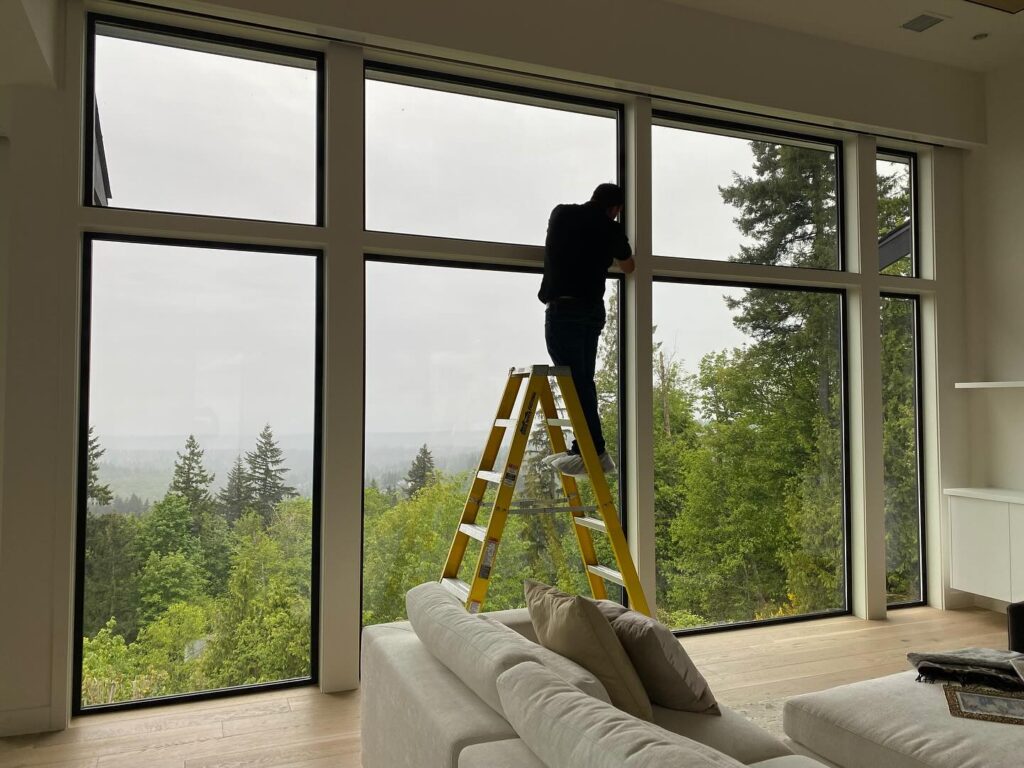
Seattle has a reputation for rain and clouds. What it doesn’t advertise is what happens when the sun breaks through in June, July, and August, particularly in the afternoon. West-facing glass in South Lake Union, downtown Bellevue, and the Eastside tech corridor turns into a radiator by mid-afternoon. ACs run at full capacity, blinds go down, views disappear, and nobody in the perimeter zone can look at a screen without squinting. The problem isn’t your HVAC system. The problem is the glass.
We’ve been installing commercial window film across Puget Sound for years, and the west-facing afternoon heat complaint is the most consistent thing we hear from facility managers in the summer. This article explains why it happens, what’s actually driving the heat, and what a single installation can do about it, without darkening the office or disrupting operations.
Why West-Facing Glass Is a Different Problem in the Pacific Northwest
Seattle sits in DOE Climate Zone 4C (the Marine classification). That means cool, wet winters and mild summers, but “mild” doesn’t mean problem-free when it comes to solar gain. Because Seattle is relatively far north (latitude ~47°N), the summer sun travels a lower arc than in sunbelt cities. By mid-afternoon, the sun shifts into a position where west-facing glass receives far more direct exposure than it does earlier in the day.
This matters because glass is most vulnerable to solar penetration when sunlight hits it straight on. South-facing windows deal with high-angle noon sun that roofs and overhangs can partially block. West-facing glass in the afternoon gets no such relief: the sun is right at eye level, and there’s nothing in the building envelope standing between it and the interior. Some waterfront properties may also experience additional glare from reflected sunlight.
Seattle’s overcast baseline also works against most buildings here. Because sunshine is intermittent for most of the year, facilities are typically under-equipped for when it actually arrives. Buildings in Phoenix have solar control as standard. Buildings in Seattle often have single or older double-pane glass with no additional film, which is fine 200 days a year and a real problem on the 40 sunny summer days when occupant complaints spike.
What’s Actually Happening Inside Your Building at 2–4 PM
Most of the heat associated with sunlight comes from infrared radiation, though visible light can also contribute after it is absorbed by interior surfaces. Infrared arrives before your occupants consciously notice the temperature change. By the time the perimeter zone feels hot, the heat has already been accumulating for over an hour.
The result is a predictable sequence of problems across the afternoon:
- The perimeter zone near west-facing glass runs 5–10°F hotter than the rest of the floor.
- The HVAC system ramps up to compensate for the whole floor, but the heat source is the glass itself, not the air, so it can’t win.
- Blinds go down as a workaround, removing the natural light the office was designed around and increasing the artificial lighting load.
- Occupants move away from perimeter desks or stop using them altogether.
- Productivity drops in the exact zones that typically house client-facing or leadership workspaces.
Glare is the other piece of this. According to the American Optometric Association, 58% of office workers experience digital eye strain, and afternoon sun washing out west-facing monitors is one of the most direct causes. A Cornell University study found that optimized daylighting (light without glare) reduced eye strain symptoms by 84% and cut drowsiness by 10%. The goal isn’t darkness. The goal is controlled light without the heat spike that makes perimeter zones unusable.
Why Standard Window Tint Isn’t the Answer
The instinct for most facility managers is to tint the glass, and standard tint does reduce solar gain, but by reducing visible light transmission across the board. A basic reflective film blocks heat by blocking everything, which turns bright, productive office space into something that feels like a cave. For tech offices in SLU or Bellevue with floor-to-ceiling glass, that’s not a viable trade-off.
The technology that actually solves this is spectrally selective film. Instead of blocking all wavelengths equally, it targets the infrared spectrum (the wavelengths responsible for heat) while leaving visible light mostly intact. Visible Light Transmittance (VLT) is the key number: it tells you how much natural light passes through. With standard tint, higher VLT means weaker heat rejection. With spectrally selective film, the two aren’t linked — you get both.
Here’s how the two approaches compare on the metrics that matter for an office building:
| Standard Reflective Film |
3M Prestige (Spectrally Selective) |
| Visible light blocked |
High — office noticeably darkens |
Low — natural appearance maintained |
| Infrared rejection |
Moderate |
Up to 97% |
| Exterior appearance |
Mirror-like |
Clear, low-reflective |
| Signal interference |
Possible (metallized construction) |
None (non-metallized) |
| Commercial warranty |
Varies by product |
Up to 15 years via certified dealer |
The difference in practice: a Prestige 70 film allows 70% of natural light through and still outperforms standard tint at 20 VLT on heat rejection. That’s the technology gap between the two product categories.
3M Prestige — How It Performs on West-Facing Office Glass
3M Prestige Series films reject up to 97% of the sun’s infrared light and block up to 99.9% of UV rays, while maintaining low interior and exterior reflectivity. There’s no mirror-like exterior finish: the glass looks like glass. From inside the building, views remain clear. The film operates invisibly, which matters for offices where aesthetics and client-facing appearances are part of the environment.
The headline performance numbers from 3M’s product documentation:
- Up to 97% infrared rejection (900–1,000nm range) — the wavelengths most responsible for the “radiant heat” sensation near glass
- Up to 60% total solar heat rejected — what this means for your SHGC (Solar Heat Gain Coefficient) is a measurable reduction in cooling load across the floor
- Up to 99.9% UV blocked — protects furnishings, finishes, and occupants simultaneously
- Up to 79% reduction in summer heat gain — the DOE-validated figure for solar control window film at peak exposure
- Non-metallized construction — no signal interference with cellular, WiFi, or GPS, which is a hard requirement in most Puget Sound tech offices
The SHGC (Solar Heat Gain Coefficient) is the technical metric used to compare window performance before and after film. Film lowers the effective SHGC of your existing glass without replacing it. For a west-facing office building running older double-pane glass, the improvement from Prestige 40 or Prestige 70 is the difference between a cooling system fighting the glass and a cooling system doing its actual job.
As a 3M certified commercial dealer, we install Prestige with the full 3M manufacturer warranty, which for commercial applications runs up to 15 years. That warranty is only valid through certified installers. An uncertified installation using the same film product loses the manufacturer warranty entirely, which is worth understanding before accepting a lower quote from a non-certified shop.
What Puget Sound Facility Managers Should Realistically Expect
We’ll give you the honest version, not the sales version. Window film doesn’t replace HVAC; it reduces the thermal load your HVAC system has to manage. On west-facing glass in a Bellevue tech office or a South Lake Union professional services building, the practical outcomes are fewer perimeter zone complaints, more comfortable working conditions near the glass, and lower peak cooling demand on hot summer afternoons.
The energy data backs this up. Approximately 33% of commercial cooling costs come from solar heat gain through glass, and on a building with significant west-facing glazed area, that’s a meaningful share of the utility bill. The DOE recognizes window film as one of the fastest-payback commercial energy conservation technologies, with a baseline payback of approximately three years.
Installation typically doesn’t require closing the office. We schedule commercial projects around operating hours, often early morning or weekend installs for client-facing spaces. For most office floors, a full installation takes one to two days. The film cures within 30 days, during which some minor haziness is normal; after cure, performance is immediate and consistent for the life of the film.
We’ve completed commercial installations for clients including One Medical, a healthcare provider with specific requirements around occupant comfort and glass performance. West-facing office heat is a problem we’ve solved many times in this market, and the results are consistent.
How to Assess Your Building Before Calling
You don’t need a formal energy audit to determine whether window film is worth investigating. A focused walk-through during peak afternoon hours tells most of the story. Here’s what to look for:
- Temperature at the perimeter. Walk the west-facing zone between 2 and 4 PM on a clear day. If it’s noticeably warmer than the rest of the floor and occupants have blinds down or are avoiding those desks, the glass is the problem.
- Which floors are worst. Higher floors with less obstruction from neighboring buildings receive more direct solar load. Start your assessment there.
- Existing glass type. Single-pane and older double-pane glass respond most dramatically to film installation. If you can access the original glazing spec, it helps us recommend the right film faster.
- Where complaints are concentrated. West and southwest are the consistent problem orientations in Puget Sound summers. North-facing glass rarely has a summer heat issue; east-facing glass is a morning problem, not an afternoon one.
If you manage multiple tenants or a large floor plate, a quick survey of facilities staff about where heat and glare complaints originate will focus the assessment on the areas where film will have the most impact.
Why DA Customs for This Project
We’re a 3M certified commercial installer with two locations serving Tukwila and Bellevue, which means we’re local to the buildings we work on, not dispatching crews from out of region. In March 2026, we received 3M’s recognition as Best New Dealer on the West Coast, a distinction that reflects installation quality and process rather than sales volume.
We don’t do residential tinting. Commercial window film is what we do, and we know the specific requirements of Seattle and Bellevue office buildings: lease considerations, building management approvals, after-hours installation logistics, and the glass compatibility assessment that determines which film spec is correct for your existing glazing. If you’ve been comparing film quotes and getting different product recommendations from different vendors, we’re glad to explain why: sometimes it’s a legitimate difference in film selection, and sometimes it’s a spec mismatch that matters once the film is on the glass.
If you’re weighing this against an HVAC upgrade or other building improvements, our comparison of HVAC vs. 3M commercial window film covers the cost math directly.
We offer free on-site assessments for commercial projects. We visit your building, evaluate the west-facing glass, confirm glass compatibility, and give you a clear product recommendation and realistic expectation before any commitment.
Request a free assessment at DA Customs, or call us directly at 425 633 6288.
May is when most property managers finalize their summer cooling budgets. HVAC upgrades are the default answer: more tonnage, newer units, smarter controls. But there’s a question worth asking before the budget gets committed: what’s actually causing the heat problem? For many Seattle office buildings, the answer is glass.
Why Seattle Office Buildings Overspend on Cooling Every Summer
Seattle’s commercial building stock wasn’t built for heat. Before June 28, 2021, the region had recorded only three days above 100°F in its entire history. That summer, temperatures hit 108°F over three consecutive days. Property managers added portable cooling units, HVAC contractors ran six-week backlogs, and buildings designed for mild Pacific Northwest summers became genuinely unlivable.
We’ve assessed many commercial properties in the Puget Sound since that summer. The pattern is consistent. Buildings added cooling capacity under pressure and at peak contractor pricing. Most are still dealing with the same complaint: the west and south sides of the floor are 10–15°F hotter than the rest, perimeter workstations are miserable in July, and the AC runs constantly without reaching setpoint.
On a recent job at a Bellevue office, the facility director told us they’d replaced two rooftop units the year before and still had tenants calling in heat complaints every afternoon. We assessed the west facade, floor-to-ceiling glass with no tinting or treatment. The problem wasn’t the equipment. The cooling budget goes up. The underlying cause stays the same.
How Solar Heat Gain Actually Works and Why Your AC Can’t Keep Up
Solar Heat Gain Coefficient (SHGC) measures what fraction of the sun’s heat passes through a window and enters the building. Standard commercial glass without treatment carries an SHGC of around 0.70–0.87. That means most incoming solar energy enters the space directly.
According to the U.S. Department of Energy, solar heat gain through windows accounts for roughly one-third of a commercial building’s total cooling load. That’s a structural cause, not a minor inefficiency. The HVAC system on a west-facing floor in Seattle is fighting a heat source positioned three feet from every employee near a window, and the load peaks in the afternoon, when the system is already running hardest.
Adding cooling tonnage addresses the effect. It doesn’t change how much heat is entering the building each hour. We explain this on every commercial assessment we run, because it changes how property managers think about the capital decision.
What HVAC Upgrades Actually Cost for a Seattle Commercial Building
Replacement costs vary based on what you’re replacing and how accessible it is. A single rooftop unit serving a smaller commercial space runs $15,000–$30,000 installed for buildings in the 2,000–5,000 sq ft range. For a 5,000–15,000 sq ft office, a typical mid-size Seattle floor plate, expect $15,000–$50,000 per unit replacement, including electrical integration and controls. Larger buildings needing multiple units or chiller systems can run well past $50,000.
Seattle-specific factors push these numbers higher. Rooftop access in urban buildings requires crane time, adding $1,000–$3,000 per placement. Upgrading to newer controls or integrating into a building automation system adds another $2,000–$10,000. A Seattle City Light case study of a 70,000+ sq ft South Lake Union office showed a major HVAC controls upgrade at $122,000, with base and performance incentive recovery of up to $40,000 after one year of verified savings.
Seattle City Light’s 2026 commercial incentive schedule does offer rebates worth claiming: advanced rooftop controls qualify for $120–$500 per ton, and heat pump and fan system improvements earn $0.36 per kWh saved. These help offset capital cost, but the net outlay for any meaningful cooling upgrade is still well into five figures.
The honest limitation of any HVAC upgrade: once the new equipment is running, the solar load coming through the glass is unchanged. You’ve invested in handling the heat better. You haven’t reduced how much heat enters.
What 3M Commercial Window Film Costs and What It Reduces
3M solar control films for commercial applications run $5–$8 per sq ft installed for standard options. The 3M Prestige series, designed to reject up to 78% of solar heat while maintaining visible light transmission above 70%, typically runs $10–$12 per sq ft installed. The total project cost depends on your glass area, building access, and the film spec that best fits your glass type.
What the film does is documented, not estimated. As a 3M-authorized dealer, we produce the Solar Heat Gain Coefficient before and after installation for every commercial project, specific to that glass-film combination. A property manager gets a real number, not a marketing range. For a building with standard commercial glazing, the right 3M solar control film cuts the heat entering through that glass by more than half.
The Department of Energy ranked window film among the top 50 commercially available energy conservation technologies, citing a typical payback period of around three years. 3M’s own data puts annual savings at $1–$2 per sq ft of film installed, or up to 19 kWh per sq ft of glass treated. Where your building lands in that range depends on sun exposure, existing glass type, local electricity rates, and the specific film installed.
Glass compatibility matters more than most installers acknowledge. Certain film types applied to older double-pane units can cause thermal stress that cracks the seal. Before we specify any film, we assess the existing glass type and frame condition. Every project. It’s not an upsell, it’s what prevents a warranty claim two years later.
The 5-Year Cost Comparison: HVAC vs. Window Film for a Typical Seattle Office
The figures below use a hypothetical 20,000 sq ft Seattle office building with 4,000 sq ft of treated glass on south and west exposures. These are illustrative examples within verified cost ranges — actual project costs require an on-site assessment.
| HVAC cooling upgrade |
3M commercial window film |
| Upfront cost |
$30,000–$60,000 (2 RTU replacements, crane, controls) |
$20,000–$48,000 (4,000 sq ft, standard to Prestige) |
| Estimated net cost |
$15,000–$45,000 after SCL rebates |
$12,000–$48,000 |
| Annual energy savings |
10–15% reduction on affected zones |
$4,000–$8,000/yr ($1–$2/sq ft × 4,000 sq ft) |
| Typical payback period |
5–10 years |
3–6 years |
| Reduces solar load? |
No — heat through glass unchanged |
Yes — 50%+ reduction through treated glass |
| Disrupts operations? |
Yes — equipment replacement, possible tenant notice |
Minimal — most floors completed in 1–2 days |
| Product lifespan |
15–20 years (equipment) |
20–30 years (3M film with warranty) |
Neither scenario is wrong. They’re solving different problems, at different costs, with different payback profiles.
Why Most Property Managers Do Both and Which One to Do First
HVAC equipment has a lifespan. If your rooftop units are approaching 15–20 years old, you’ll replace them regardless of what else is in the budget. The question is sequencing.
- When existing HVAC is functional but struggling on peak days, we recommend film first. Reducing solar load means the current equipment runs fewer cycles during peak afternoon hours. We’ve had property managers in Bellevue and Kirkland report back after installation that their compressors were cycling less in August than they had in previous summers. That’s real service life added to equipment you were already planning to replace eventually.
- When equipment is already at the end of life, replace it first, but loop us in before your mechanical engineer finalizes the spec. HVAC sizing is based on calculated heat load. If we’re installing film before the new system goes in, your engineer may be able to size down slightly on cooling capacity. That reduces equipment cost and long-term energy use. Most building owners never have this conversation because they don’t know the solar load is about to change. We flag it every time.
Either way, window film and HVAC improvements compound rather than compete. Film makes any cooling system run less hard. HVAC ensures you have capacity for peak demand. Most Seattle commercial buildings need both eventually — the decision is which problem is costing you money this summer.
We offer a no-cost on-site assessment for commercial properties in Seattle, Bellevue, Tacoma, Kirkland, and Renton: glass compatibility check, sun exposure analysis by facade, and a 3M film specification with a projected SHGC reduction and energy savings estimate — before you commit to anything. As a 3M-authorized dealer, our recommendations are tied to verified product data, not a rule-of-thumb range.
Request your assessment at da-customs.com/contact
Glass walls look great on a lease tour. The problem shows up on day one — your HR office faces the main hallway, your conference room has no separation from the bullpen, and every meeting is visible from the kitchen. It’s the most common reason office managers call us.
Privacy film solves it without construction, without blocking light, and without touching the lease. As an authorized 3M dealer, we install it across Seattle, Bellevue, and the broader Puget Sound area: conference rooms, lobbies, executive suites, and medical reception areas. Here’s what you actually need to know before choosing.
Why Seattle Offices Are Switching to Privacy Window Film
Blinds block light. Curtains collect dust. Neither looks right in a modern office, and both need constant maintenance. Privacy film stays on the glass, blocks the sightline, and keeps the room bright.
There’s also a local angle. Office leases in Bellevue and South Lake Union are expensive, and tenants want real upgrades without major construction. Privacy film qualifies as a reversible modification in most commercial leases—landlords approve it, it removes cleanly at the end of the term, and it adds to the space rather than limiting it. We handle lease documentation as part of the job, which helps the approval process go faster.
Types of Privacy Film for Commercial Spaces
The right film depends on how much visibility you need to block, the lighting in the space, and whether design matters. These are the four types we install most on commercial jobs.
- Frosted film is the baseline. It gives glass a sandblasted look—translucent enough to keep the room bright, opaque enough to block the view. It works in both directions, day and night, which matters for spaces with uneven interior lighting. For a basic conference room wall or HR partition, this is the most straightforward option.
- One-way mirror film lets people inside see out, while the outside sees only a reflection. It relies on light differential: the brighter side gets the reflection, the darker side gets the view. This works well on exterior-facing glass during the day, but interior office glass tends to equalize lighting after hours, which kills the effect. We’ll tell you upfront when it makes sense and when it won’t hold up.
- Gradient film fades from opaque at one end to clear at the other. The most common application is a conference room partition — frosted at seated height, clear above. You get the privacy where you actually need it without closing off the space. 3M’s Fasara Gradation series handles this particularly well, with a range of fade patterns from subtle to sharp.
- 3M Fasara decorative film is the premium option when design matters as much as function. Over 100 patterns (fabric textures, geometric designs, rice paper, dot grids, gradation styles, etc.) that look like custom etched or sandblasted glass. 3M’s documentation describes Fasara as delivering the look of etched, cut, or textured glass at a fraction of the cost. More on this below.
We can help you with choosing the right option for your office.
Conference Room Privacy Film — The Most Common Application
Conference rooms are where we do most of our privacy film work. Glass-walled meeting rooms are standard in Seattle offices, and they’re also where the problem is hardest to ignore—client calls, performance reviews, board discussions, all fully visible from the hallway.
The install we do most often: frosted film on the lower two-thirds of the glass, clear above. This covers seated sightlines entirely while keeping the upper half open. It’s clean, it’s professional, and it works in rooms of any size. For clients who want something more designed, we use 3M Fasara gradient patterns on the same area.
A 10-person conference room takes three to five hours from surface prep to cleanup. Most clients book an early morning slot, and the room is usable the same day. We work around your schedule, not the other way around.
One thing worth noting on compliance: the IBC requires distraction markers at 30 and 60 inches from the floor on full-height glass walls. Privacy film applied at those heights can satisfy both requirements at once, safety code and privacy, single install. We check this as part of the initial site visit.
How Privacy Film Works as Office Branding
Your company logo, cut from frosted vinyl and applied across a reception window or glass partition—that’s both a safety marker and a brand element. Same install, same cost, two functions.
We use digital plotter-cutting to translate a logo file into a precise frosted cut. A Bellevue tech company might run a repeating geometric pattern tied to its brand language. A medical office might use simple horizontal bands in a specific opacity. The film reads as intentional design, not a sticker, not a workaround.
For companies with multiple offices, this also solves a consistency problem. 3M guarantees uniform manufacturing across its Fasara line, which means the conference room finish in your Seattle HQ will match the one in your Bellevue office exactly. Custom etching can’t do that because it varies by vendor and by hand.
3M Fasara: The Premium Option for Seattle Offices
We recommend Fasara when the design of the space carries real weight: hospitality, executive floors, client-facing offices, or any space where “basic frosted” undersells the interior.
Fasara is a polyester decorative film that gives glass the look of etched or sandblasted surfaces, typically at less than a third of the cost of custom glass replacement. The pattern library covers four main categories: fabric and matte finishes, gradation and combination patterns, prism and dot designs, and stripe or border styles. The Gradation series is the most requested for conference rooms. Fabric and matte finishes suit offices with a more refined aesthetic.
On the specs: Fasara blocks 99% of UV light, carries a Class A fire rating under ASTM E84, and lasts up to 10 years under normal commercial use. It’s polyester rather than vinyl, which means it installs cleaner and removes without residue, which is important for leased spaces.
As an authorized 3M dealer, our Fasara installs come with the full manufacturer’s warranty covering both film and labor. Generic decorative films don’t carry this, and the quality gap shows within a few years.
What the Installation Process Looks Like
- We start with an on-site visit: measure the glass, check the surface condition, assess the glazing type. This isn’t optional. Certain reflective films create thermal stress on older insulated glass units, and we won’t recommend a product that could void your building’s glass warranty. If your lease has restrictions on modifications, we review those too and provide documentation for landlord approval if needed.
- Installation day: we prep the surface, apply the film, trim edges, and do a final squeegee pass. Single-room jobs are typically finished by mid-morning. Multi-floor projects run room by room over one or two days. The space is usable immediately after install; full cure takes a few days.
- We don’t leave until the work is signed off. If an edge needs a final trim or a pattern alignment is off, we fix it on-site. After that, we hand over documentation — 3M product code, warranty terms, install date, which building managers typically keep on file for maintenance records.
If you want to see what privacy film looks like on your specific glass before committing, we offer free on-site assessments. We bring samples, take measurements, and give you a written quote.
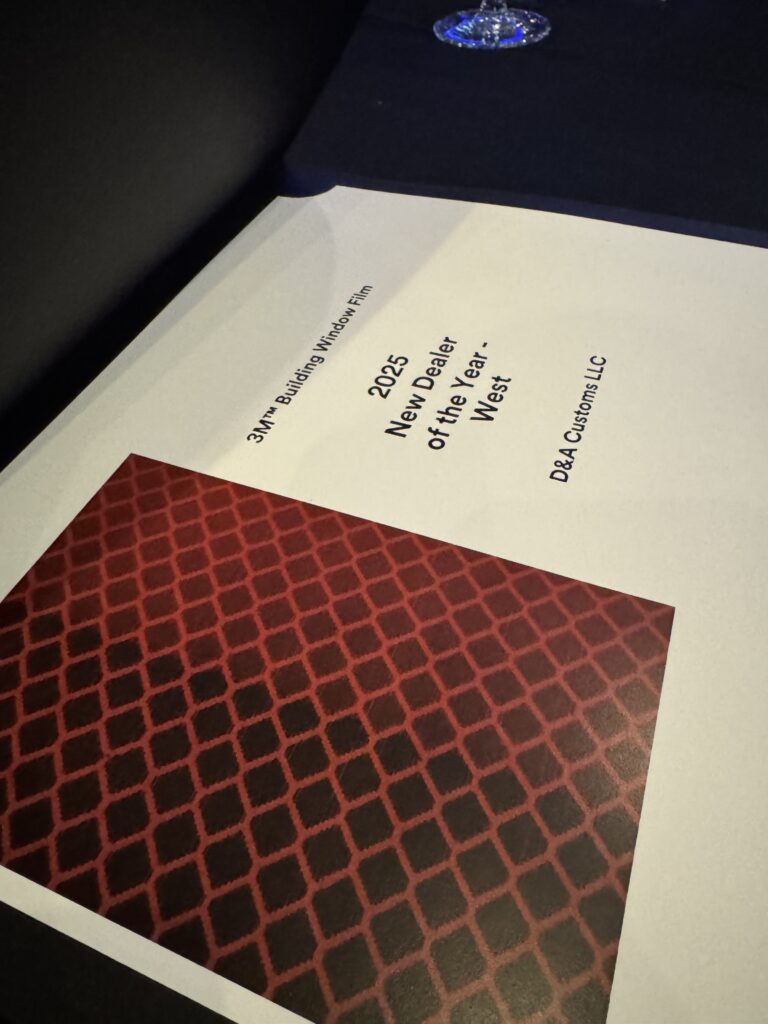
Earlier this year, 3M named D&A Customs the Best New Dealer on the West Coast. It’s a recognition we’re proud of, but this article isn’t about the award. It’s about what the certification actually means when you’re choosing a commercial window film installer for your building in Seattle, Bellevue, or Tacoma.
Property managers ask us this question regularly: “Why does it matter who installs the film, as long as the film is 3M?” It’s a fair question, and here’s the honest answer.
What Does “3M Authorized Dealer” Actually Mean?
Not every installer who mentions 3M in their marketing is an authorized dealer. 3M makes several entry-level films available to the general public, which means any company can legally advertise “3M window tinting” without holding a dealer agreement.
Authorized dealer status is different. It requires a formal dealer agreement with 3M, verified training, validated business practices, and confirmed liability and insurance coverage. According to 3M’s own certification structure, dealers can hold one of four levels: Premier, Premier Elite, 3M Certified, and 3M Large Commercial Certified — each requiring more demonstrated knowledge and project experience than the one before.
Only authorized dealers can purchase and install 3M’s high-end specialty films, including the 3M Prestige Series and 3M Safety Series. These products are not available through retail or general supply channels. When you hire a non-authorized installer who claims to use these films, you have no way to verify the product is genuine, and no 3M warranty protection.
Why 3M Certification Matters for Commercial Window Film Projects
- The warranty is the most concrete reason. When an authorized dealer installs 3M Prestige Series film on your commercial building, the warranty comes directly from 3M, not from the installer alone. 3M Prestige Series interior films carry a 15-year commercial warranty covering defects, delamination, and significant performance issues. 3M Safety Series films carry a 10-year commercial warranty. A non-authorized installer cannot offer these warranties, regardless of what they put in writing.
- The second reason is glass compatibility. Commercial buildings in Seattle vary significantly — older curtain wall systems in First Hill, newer double-pane units in the Eastside office parks, and single-pane retail storefronts in Capitol Hill. The wrong film on the wrong glass can cause thermal stress fractures, especially on sealed insulated units. Authorized dealers are trained to assess glass type before recommending any product. We do this on every job, without exception.
- Third: project scale. 3M’s Large Commercial Certified level exists specifically for multi-building or high-square-footage projects. If you’re managing a property with several floors of glazing or multiple buildings across a campus, certification level matters for both competence and liability.
The 3M Commercial Window Film Product Range We Install
As an authorized 3M dealer, we install the full range of 3M architectural window films. Each product in the lineup is designed for a specific commercial problem, and understanding the differences helps you ask better questions before committing to any project.
Here’s a brief overview of what we work with most often on Seattle-area commercial projects:
| Product |
Primary Use |
Commercial Warranty |
| 3M Prestige Series |
Solar control, glare, UV |
15 years |
| 3M Night Vision Series |
Clarity + solar control |
15 years |
| 3M Safety & Security Series |
Glass retention, smash resistance |
10 years |
| 3M Fasara Series |
Decorative, privacy |
Varies by product |
| 3M DI-NOC |
Surface film, interior finishes |
Varies by product |
Each of these requires different installation techniques and glass compatibility checks. One of the most common mistakes we see is a building manager asking for “privacy film” and getting a product that wasn’t designed for their glazing type. The authorization and training process exists to prevent that outcome.
3M Prestige Series: Solar Control for Seattle Office Buildings
The Prestige Series is the product we install most often on office buildings across Seattle, Bellevue, and Redmond. It’s 3M’s flagship solar control film, and the technology behind it is worth understanding before you decide on any sun control solution.
Traditional solar control films work by reflecting or absorbing heat using metallic layers. The Prestige Series uses a different approach: non-metalized, multi-layer optical film with nano-technology. The result is a film that rejects up to 97% of the sun’s infrared light and up to 60% of the total heat coming through your windows — without changing the appearance of your building’s glass. Interior and exterior reflectivity stay low, so you don’t get the mirror effect that older films create.
For Seattle offices, this matters for two reasons. First, the Pacific Northwest gets intense summer glare even though temperatures are moderate. The long afternoon sun angles from June through September create uncomfortable hot spots near west-facing windows, which pushes up air conditioning loads and pulls employees away from window seats. Second, the non-metallized construction means the film doesn’t interfere with Wi-Fi, cellular signals, or GPS — relevant for any building with high network density. We’ve installed Prestige on several multi-tenant office buildings in South Lake Union and Bellevue’s Spring District where signal interference from metallized film would have been a real problem.
The 15-year commercial warranty on Prestige is also worth noting in context. Most of the non-3M films we see in older buildings were installed with 5–7 year warranties from companies that no longer exist. 3M has been in the film business since they held the first window film patent in 1966. The warranty has institutional backing behind it.

3M Safety & Security Film: Protection for Commercial Glass
The Safety Series addresses a different problem: what happens to your glass when it breaks. Standard glass shatters into sharp fragments on impact. 3M Safety film is designed to hold broken glass together when a window or door is struck, whether the cause is a smash-and-grab attempt, a seismic event, or accidental impact.
When installed with the 3M Impact Protection Attachment (IPA) Sealant, the film anchors the glass to the frame. This combination is what makes the system effective for security applications. Film alone slows penetration. Film plus IPA sealant creates significantly more resistance. The distinction matters, and any installer recommending safety film for security purposes should be specifying both.
We install Safety Series in Seattle-area retail storefronts, lobbies, and ground-floor office entrances. It’s also increasingly common in healthcare facilities and school buildings where glass management during an incident is part of the safety plan. The film is optically clear, it doesn’t change the look of the glass at all. From the outside, there’s no visible difference. That’s the point. The protection is there when it’s needed, invisible until it is.
A note on what safety film does not do: it is not bulletproof and is not designed to stop a determined intruder indefinitely. It slows penetration and buys time. We’re always direct about this with clients specifying film for high-risk environments — the product description from 3M is clear on these limitations, and we pass that information along before any project starts.
3M Fasara & Decorative Films: Privacy and Branding Solutions
3M Fasara is a different category from the solar and security films. It’s a decorative and privacy film designed for interior glass surfaces — conference rooms, reception areas, office partitions, and storefront glass where you want visual separation without blocking light.
Fasara comes in over 100 pattern options, ranging from simple frosted to geometric, organic, and abstract designs. Unlike basic frosted vinyl, it’s a precision-manufactured film with consistent optical quality and a finish that withstands commercial cleaning routines without degrading. As an authorized dealer, we have access to the full Fasara catalog, not a limited selection from a distributor’s stock.
We pair Fasara with corporate branding applications more often than people expect. A company with branded cut vinyl on a glass wall and frosted film on adjacent panels is using the same glazing surface to handle two functions at once — branding and privacy. It reduces the need for additional partitions and works within existing leased office spaces without structural changes. If you’re an office tenant in a Bellevue or Seattle lease, Fasara is also easier to get landlord approval for than most permanent modifications, since it’s removable on lease termination.
What Our 3M Certification Means for Your Warranty
Here’s the practical summary of what authorized dealer status means when you sign a contract with us.
- The warranty on your 3M film comes from 3M directly, backed by a company that has been in business for over 120 years. The warranty covers defects, delamination, blistering, and significant performance degradation. It does not come solely from us; if we closed tomorrow, your 3M warranty would still be valid.
- We provide a 3M ID number on every project, which you or your property management team can use to verify our authorization directly with 3M. We also provide a commercial reference list of completed projects on request — a requirement of our dealer agreement. If you’re comparing installers, ask every one of them for this. An authorized dealer can provide it. An unauthorized installer cannot.
- Our glass compatibility assessment is included on every commercial quote. We won’t recommend a product we can’t confirm will work on your specific glazing. If the glass type creates a thermal stress risk with a particular film, we tell you before we start — not after.
If you’re managing a commercial property in Seattle, Bellevue, Tacoma, or anywhere in the Puget Sound region and want a quote or a site assessment, contact us. We’ll walk through your building’s glazing, the products that fit your goals, and the warranty terms before you commit to anything.
If you’re looking into wall graphics for your business, you already know one thing: the market looks the same on the surface, but results vary wildly.
Some companies install wall graphics and watch foot traffic increase, brand recall jump, and customers post their space on Instagram. Others end up with what looks like overpriced wallpaper.
The difference isn’t the material. It’s the approach.
Not all wall graphics work the same way:
- Some are real marketing tools that drive sales
- Others are just stickers on a wall
In this guide, we’ll cover:
- What wall graphics actually are and how they drive business results
- A side-by-side comparison of the top 5 providers in 2026
- How to choose the right solution for your space (office, retail, restaurant, fitness)
- The biggest mistakes that waste your budget
Ready to upgrade your space with wall graphics that actually work? Check out D&A Customs Wall Graphics services – custom design and certified 3M installation across Seattle, Bellevue, and the greater Puget Sound area.
Table of Contents
- What are wall graphics and why businesses use them
- Top 5 wall graphics providers compared
- Why custom solutions outperform templates
- Top 5 wall graphics solutions for business in 2026
- D&A Customs – best for branded business spaces
- SquareSigns – large catalog, template-driven
- Blik – designer decor for residential use
- Decals.com – fast and simple, low customization
- WallMonkeys / Fathead – mass-market decals
- What types of wall graphics actually drive results in 2026
- How to choose wall graphics that work (and avoid budget mistakes)
- Frequently asked questions
What are wall graphics and why businesses use them
Wall graphics are large-format printed vinyl, films, or decals applied to interior or exterior walls. They’re used for branding, decoration, advertising, wayfinding, and atmosphere creation.
But here’s the key insight: for businesses, wall graphics aren’t decoration. They’re a sales tool.
Why? Because the right wall graphics:
- Increase brand recognition and recall
- Shape the first impression a customer forms in the first 3-5 seconds of entering your space
- Drive social sharing (the Instagram effect – customers become marketers)
- Differentiate you from competitors with templated, generic spaces
- Create wayfinding and functional design in offices, clinics, and large retail
And the most underrated benefit: they’re dramatically cheaper than a full renovation, but produce a comparable transformation in how a space feels and performs.
That’s why search demand keeps growing for terms like:
- custom wall graphics for office
- commercial wall graphics
- retail wall graphics
- vinyl wall murals for business
- wall graphics installation near me
Quick numbers: well-designed branded environments can lift in-store dwell time by 20-30% and improve brand recall by up to 70% (compared to generic, unbranded spaces). The investment in wall graphics typically pays back through increased customer engagement and word-of-mouth marketing within months, not years.
Top 5 wall graphics providers compared
A quick side-by-side before the detailed breakdown:
| Provider |
Best for |
Customization |
Branding focus |
Installation |
Result type |
| D&A Customs |
Branded business spaces |
Maximum |
Strong |
Certified, in-house |
Drives sales |
| SquareSigns |
DIY users, small projects |
Limited |
Weak |
DIY only |
Decoration |
| Blik |
Residential design |
Medium |
Minimal |
DIY only |
Decoration |
| Decals.com |
Quick standard decals |
Low |
Weak |
DIY only |
Decoration |
| WallMonkeys / Fathead |
Mass-market, themed |
Low |
None |
DIY only |
Decoration |
* Pricing varies widely by size, material, and installation requirements.
Why custom solutions outperform templates
If you’re spending more time choosing from a template library than thinking about what your space should communicate, you’re already on the wrong track.
- Brand fit matters more than visual appeal. A beautiful generic mural that doesn’t reflect your brand is just expensive wallpaper.
- Your competitors use the same templates. Stock decal catalogs are public – anyone can buy the same thing. That defeats the entire point.
- Installation quality is the difference between professional and amateur. Bubbles, peeling edges, misaligned graphics – all signs of DIY or poorly trained installers. Customers notice.
- Material grade affects longevity. Cheap vinyl fades, lifts at corners, or damages walls when removed. Premium 3M materials hold up for years.
Industry insight: commercial spaces with custom branded environments report significantly higher employee engagement and customer return rates than those using generic decor – because the space itself becomes part of the brand experience.
Top 5 wall graphics solutions for business in 2026: detailed breakdown
Each option below is broken down by the same criteria so you can compare apples to apples – not marketing claims to marketing claims.
1. D&A Customs – best for branded business spaces
D&A Customs is a Seattle-based commercial graphics specialist serving the greater Puget Sound region (Seattle, Bellevue, Tukwila, Renton, Kirkland, Redmond, Burien). Two physical locations, certified 3M installer, full in-house design team.
Unlike template-driven services that ship vinyl from a catalog, D&A Customs treats wall graphics as commercial design + brand strategy + premium installation. Every project is custom-built around the client’s brand, space, and business goal – whether that’s brand reinforcement in a lobby, an Instagram-worthy moment in a restaurant, or wayfinding in a medical facility.
Why businesses choose D&A Customs:
- Custom design from scratch – in-house design team creates a proof for approval before anything is printed
- Premium 3M and Avery Dennison materials – certified installer, real warranty
- Climate-controlled installation – shops monitored 24/7 for temperature, humidity, and dust (these affect long-term adhesion)
- End-to-end service – consultation, design, production, installation, removal
- Commercial expertise – clients include Sound Transit, medical facilities, retail chains, and local businesses
- Local Pacific Northwest knowledge – knows which materials hold up in Seattle’s climate
- Range of services beyond wall graphics – window graphics, commercial window tinting, 3M DI-NOC surface refinishing, and vehicle wraps
Best for:
- Office spaces, lobbies, and reception areas wanting branded environments
- Retail and restaurant interiors looking to drive customer engagement
- Medical facilities, clinics, and government spaces requiring professional wayfinding
- Coworking spaces, gyms, and salons that want Instagram-shareable moments
- Property managers and architects spec-ing out commercial buildouts
- Local Seattle and Puget Sound businesses needing a reliable installer
Pros of D&A Customs:
- True custom design – no templates
- 3M Certified Installation with real warranty
- Bonded, insured, and licensed
- Free consultation and honest quotes (no vague estimates)
- Two locations across Puget Sound for accessibility
- Fast turnaround with realistic timelines that get hit
- Strong portfolio of verified Google reviews from real commercial clients
Cons:
- Local to the Seattle / Puget Sound region – not a national e-commerce shop
- Higher upfront investment than DIY decal kits (but much higher long-term value)
Pricing:
Custom quote based on size, material, design complexity, and installation. Free consultation included. Typical commercial wall graphics projects range from $8 to $25 per square foot installed, depending on substrate and material grade.
Ready to start? Request a free consultation – D&A Customs responds to every inquiry within 24 hours. Or browse the project gallery to see real installations across Seattle.
2. SquareSigns – large catalog, template-driven
SquareSigns is an online sign and graphics retailer with a wide product catalog and a self-serve online configurator. Suitable for small businesses and DIY projects where speed and price matter more than brand differentiation.
Features:
- Online product configurator
- Wide selection of standard formats
- Quick checkout and shipping
Best for:
- Small businesses needing simple, off-the-shelf signage
- DIY users with their own basic design files
- Projects where speed and cost outweigh brand uniqueness
Pros:
- Easy ordering process
- Predictable pricing on standard products
- Wide product range
Cons:
- Template-driven, limited true customization
- No installation service – you handle it
- Weak focus on brand strategy or commercial design
- Generic results that don’t differentiate your space
Bottom line: better suited for DIY projects than for businesses that need brand-driven results.
3. Blik – designer decor for residential use
Blik focuses on stylish, designer-oriented wall decals primarily for residential and lifestyle use. Curated artist collaborations and a strong design aesthetic – but limited fit for commercial branding.
Features:
- Designer collections and artist collaborations
- Aesthetic-driven product line
- Quality removable vinyl
Best for:
- Homeowners decorating residential interiors
- Kids’ rooms, nurseries, lifestyle spaces
- Boutique cafés or shops with a residential aesthetic
Pros:
- Strong design quality on standard products
- Quality materials
- Curated, taste-driven selection
Cons:
- Not built for commercial brand applications
- Limited custom branding capability
- No installation service
- Smaller scale – not designed for large commercial walls
Bottom line: excellent for home use, limited for serious business branding.
4. Decals.com – fast and simple, low customization
Decals.com is a high-volume vinyl decal e-commerce shop. Wide variety, easy ordering, but mostly templated designs with minimal customization beyond text and color swaps.
Features:
- Large catalog of pre-made designs
- Fast order processing
- Bulk ordering options
Best for:
- Quick decal needs (windows, vehicles, basic signage)
- Small businesses with simple text-based decal needs
- Customers who don’t need design help
Pros:
- Affordable for simple projects
- Easy to order online
- Fast shipping
Cons:
- Standard, templated designs
- Minimal custom design support
- No installation included
- Low brand differentiation potential
Bottom line: a transactional vendor for basic decals – not a partner for branded environment design.
5. WallMonkeys / Fathead – mass-market decals
WallMonkeys and Fathead operate in the mass-market themed decal space – sports figures, characters, stock photography prints. Useful for kids’ rooms or fan spaces, less so for branded business environments.
Features:
- Massive catalog of themed and licensed decals
- Sports, entertainment, and character licensing
- Quick fulfillment
Best for:
- Kids’ rooms, themed bedrooms
- Sports bars or themed venues
- Quick decorative installs without strategic intent
Pros:
- Huge catalog
- Themed and licensed options
- Affordable mass-market pricing
Cons:
- Zero brand uniqueness
- Not designed for commercial brand environments
- No design or installation service
- Low-grade vinyl in many SKUs
Bottom line: decoration product, not a business solution. Skip if you’re trying to build brand equity.
What types of wall graphics actually drive results in 2026
Across hundreds of commercial installations, four formats consistently deliver the strongest ROI:
1. Branded brand walls (logo + story)
Where they work: office lobbies, reception areas, showrooms, conference rooms.
Why: creates trust and brand recognition in the first 3-5 seconds. Visitors form an opinion of your company before anyone speaks.
2. Full-wall murals
Where they work: retail, restaurants, gyms, large open commercial spaces.
Why: transforms atmosphere, creates a focal point, drives photo sharing. A single well-designed mural can change how a space feels.
3. Wayfinding and functional graphics
Where they work: offices, coworking spaces, medical clinics, schools, government facilities.
Why: not just attractive – actually useful. Reduces friction, helps visitors orient, and supports a polished operational image.
4. Instagram zones
Where they work: cafés, restaurants, salons, retail stores, fitness studios.
Why: when customers post your space online, they become unpaid marketers. The right photo-worthy wall can drive substantial organic reach.
How to choose wall graphics that work (and avoid budget mistakes)
Five common mistakes that turn wall graphics from a marketing investment into a sunk cost:
Mistake 1: Choosing “looks nice” over “drives result”
Beautiful doesn’t always work. A great-looking generic mural that doesn’t reflect your brand or invite customer engagement is decoration, not marketing. Define the business goal first.
Mistake 2: Going with templates
If your wall graphic could appear in any other business, it’s not branding. Template = same as everyone else = zero competitive advantage.
Mistake 3: Skipping the strategy step
Wall graphics should be part of your marketing strategy, not an afterthought. What story should the space tell? What action should visitors take? Where will customers naturally photograph it?
Mistake 4: Cutting corners on materials
Cheap vinyl fades, lifts at the edges, and damages walls during removal. Premium 3M-grade vinyl lasts 5-10+ years and removes cleanly. The math almost always favors quality.
Mistake 5: DIY installation on commercial-scale work
Bubbles, misalignment, and peeling edges signal a low-quality operation to your customers – even if your brand isn’t. Professional installation is the difference between “looks like a business” and “looks like a side project.”
What you actually need for results:
- Custom design tied to your brand strategy
- Strategic placement based on customer flow and sightlines
- Professional installation with premium materials
- A clear vision for how the graphic supports your business goal
That’s the difference between “a sticker on the wall” and “an asset that drives sales.”
Conclusion: which wall graphics solution should you choose in 2026?
If you just need a basic decal for a kid’s room or a temporary sign, the mass-market services work fine. They’re cheap, fast, and predictable – within their limits.
If your goal is building a branded environment that drives business results, the choice narrows quickly. You need custom design, premium materials, and certified installation – all working together as one process.
That’s exactly why Seattle-area businesses, architects, and property managers choose D&A Customs. Not because they’re the cheapest option – but because they treat wall graphics as a commercial design discipline, not a vinyl shipping business.
Next step: request a free consultation to discuss your space, your brand, and your goal. Or call 425-633-6288 to talk through your project. Free consultations, honest quotes, 24-hour response time. You can also explore the project gallery to see real wall graphics installed across Seattle, Bellevue, and the greater Puget Sound area.
Frequently asked questions about wall graphics
What are wall graphics and how do they work for business?
Wall graphics are large-format printed vinyl applied to interior or exterior walls used for branding, wayfinding, decoration, or advertising. For businesses, they function as a marketing tool that builds brand recognition, shapes customer perception, and creates memorable spaces – at a fraction of the cost of a full renovation.
How much do custom wall graphics cost?
Pricing depends on size, material, design complexity, and installation. Template-based decals start around $30-$200 per piece. Custom commercial wall graphics with design and professional installation typically range from $8 to $25 per square foot, depending on the substrate and material.
Are wall graphics permanent or removable?
Both options exist. Removable vinyl is ideal for temporary campaigns, seasonal promotions, or rented spaces and lasts 1-3 years. Permanent wall graphics use durable cast vinyl that lasts 5-10+ years and is suitable for long-term branding.
Will wall graphics damage my walls when removed?
When professionally installed and removed using the correct materials (such as 3M removable adhesives), wall graphics come off cleanly without damaging paint or drywall. Cheap, off-the-shelf decals can leave residue or pull paint when removed.
How long does it take to design and install wall graphics?
Custom projects typically take 1-3 weeks from concept to installation. Design and approval take 3-7 business days, production takes 3-5 days, and installation depends on size – usually a few hours to a full day for large murals.
Can wall graphics be applied to textured walls?
Yes, but it requires the right material. Specialized textured-surface vinyl (like 3M IJ8624) is designed to conform to brick, stucco, concrete, and rough textures. Standard vinyl will fail on these surfaces – this is one reason to work with a certified installer who knows the right material for the job.
What’s the difference between wall graphics and wallpaper?
Wall graphics are typically vinyl-based, removable, and used for shorter-term branding or design. Traditional wallpaper is paper-based, more permanent, and harder to remove or change. Vinyl wall graphics give you brand flexibility – you can refresh them as your brand evolves.
Do you offer wall graphics installation in Seattle and Bellevue?
Yes. D&A Customs has two locations serving the greater Puget Sound region: Tukwila and Bellevue. We install wall graphics across Seattle, Bellevue, Tukwila, Renton, Kirkland, Redmond, Burien, and surrounding areas.
Can wall graphics work for outdoor use?
Yes, with the right material. Outdoor-rated vinyl with UV protection lasts 5-7 years in exterior conditions. The Pacific Northwest’s wet climate especially demands proper material selection – using interior vinyl outside leads to fast failure.
Do you handle the design or do I need to provide artwork?
D&A Customs has an in-house design team that creates artwork from scratch based on your brand. You don’t need to provide print-ready files. We design, you approve, we produce and install.