
A single hot guest room can turn into a bad review before housekeeping even finds out. That risk grows every summer for hotels and short-term rentals across Seattle and Bellevue. Guests now expect air conditioning as normal, not as a bonus. When a west-facing room heats up by mid-afternoon, the property pays for it in refunds, bad reviews, and guests who don’t come back.
The region is cooling its buildings faster than it used to, and that changes what guests expect. Buildings that got by for decades without much cooling are hitting real limits during heat waves now. This article covers where window film fits: guest rooms, common areas, and how to install it without shutting rooms down mid-season.
Seattle hotels used to lean on mild summers and skip heavy investment in cooling. That doesn’t hold up anymore. The U.S. Census Bureau’s American Housing Survey tracks this shift. Across King, Pierce, and Snohomish counties, the share of homes with air conditioning rose from 44% in 2019 to 53% in 2021, a nine-point jump in two years.
Guests booking Seattle and Bellevue hotels increasingly come from homes with AC as standard. Their tolerance for a warm room drops with it. Hotel general managers tell us the same thing this summer: guests who never mentioned room temperature five years ago now ask about it before they book.
Many older hotel buildings and boutique properties still run on window units or partial central air. A full HVAC retrofit isn’t realistic without shutting rooms down for weeks. Stopping heat at the window glass reduces the load on whatever cooling system is already there.
Guest rooms facing west or south heat up the hardest and get the most complaints. Closing the blackout curtains fixes the heat, but it blocks the view guests booked the room for. That trade-off is the problem window film solves.
3M’s Prestige Series window film rejects up to 97% of the sun’s infrared light. It also rejects up to 60% of total solar heat and blocks up to 99.9% of UV rays. It does this without darkening the glass or changing the view much. Guests keep the skyline or water view, and the room stays cooler through the hottest part of the afternoon.
| Prestige Series performance | Rejection rate |
|---|---|
| Infrared light | Up to 97% |
| Total solar heat | Up to 60% |
| UV rays | Up to 99.9% |
These numbers come from 3M’s own specs for the Prestige Series line. On guest-room jobs, we start with west- and south-facing rooms first. Those rooms carry the heaviest heat and get the most complaints on any hot week.
The same film works on lobby walls, restaurant windows, and atrium skylights. Floor-to-ceiling glass is common in Seattle-area hotels built or renovated in the last two decades. These spaces set the first impression for guests checking in. A hot, glaring lobby ruins that impression before anyone reaches the front desk.
Prestige Series film carries a 15-year warranty when an authorized dealer installs it on a commercial building. That matters on large-glass jobs, where a failed seal or peeling film is easy to see and costly to fix. As an authorized 3M commercial dealer, we install it the way 3M requires, so the warranty stays valid.
Glass in public-facing areas often needs more than heat control. A spa entrance, a conference room, or a ground-floor lobby facing a busy sidewalk usually needs some privacy too. 3M FASARA decorative film adds texture or pattern to glass. It blocks the view through the glass but still lets light in.
FASARA can also carry a property’s logo, colors, or directional signs on interior glass. We install it during the same visit as solar film when a property wants both done together. That keeps the work to one scheduled visit instead of two.
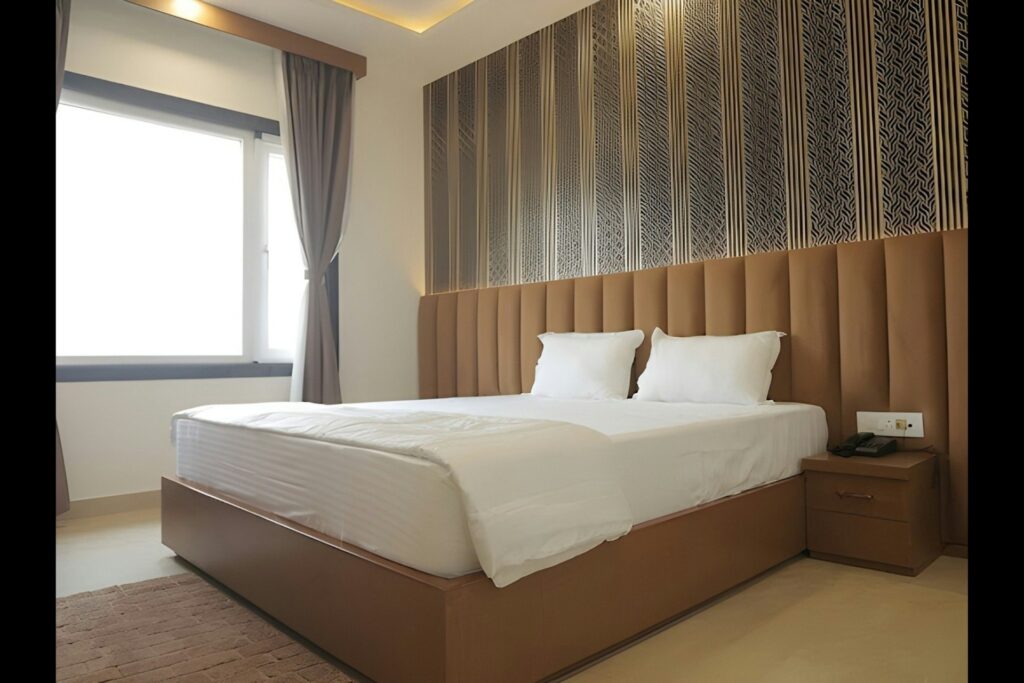
A single hot room is a comfort problem. Multiply that heat across 50, 100, or 200 rooms facing the same direction, and it becomes an HVAC capacity problem for the whole property. Rooms that run hotter push window units and central systems harder for longer each day. That shows up on the electric bill during peak season.
In our experience mapping heat floor by floor, west-facing top floors usually carry the highest cooling load. We see this pattern on most mid-rise properties in the region. Cutting heat at the window reduces that load across every room at once, not just the ones guests complain about.
Full HVAC retrofits often mean shutting down rooms or public areas for weeks. That isn’t realistic for an occupied hotel. Window film installation works differently. We schedule it room by room or floor by floor, working around checkout times so most guests never know the work happened.
A phased installation on an occupied property usually follows this sequence:
A single room usually stays out of service for a few hours, not days. For short-term rental portfolios, we can schedule installation around the same cleaning window between guests, so the property doesn’t lose any booking days.
If summer heat is showing up in guest complaints or your cooling bill, we’ll walk the property room by room and build a phased plan around your booking schedule. Schedule a property walkthrough with DA Customs for a room-by-room heat and glare assessment before the next heat wave hits.