
Open-plan offices and glass-heavy medical spaces are solving the privacy problem the wrong way. Glass walls get torn out and replaced. Frosted glass gets specified during construction and locked in for good. Blinds go up and never come back down. Each fix is either expensive, permanent, or both.
3M FASARA works differently. You apply it to glass that’s already there, choose exactly how much privacy you want, and remove it cleanly if the space changes. Here’s what it does, and where it fits in Seattle-area offices and medical spaces.
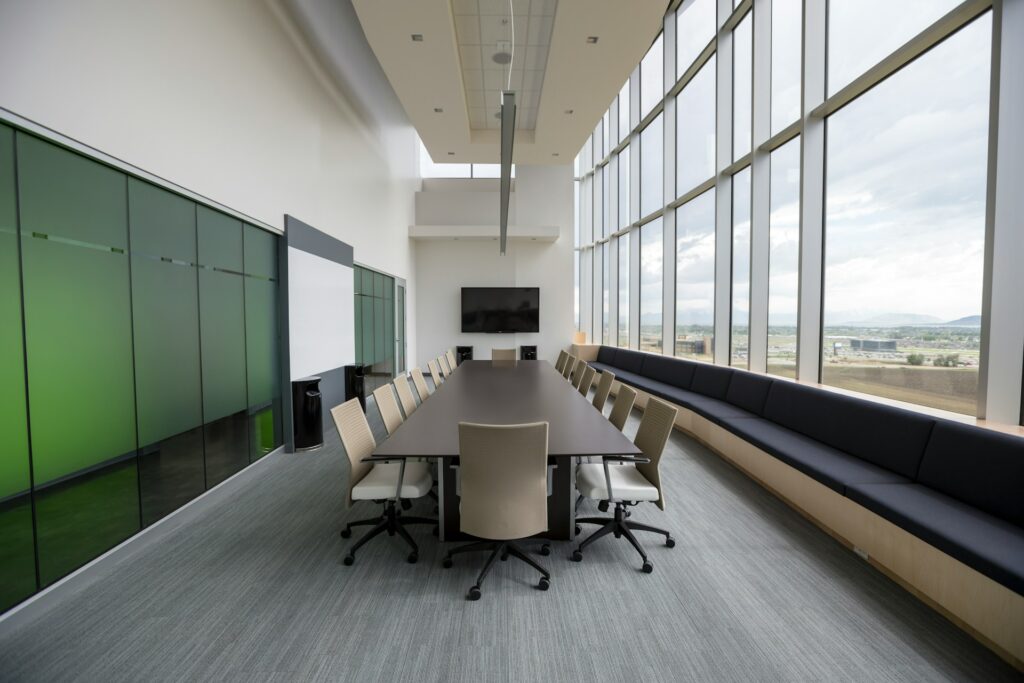
Open floor plans put glass everywhere: conference rooms, HR offices, reception areas, collaboration spaces. It looks great in a listing photo. It’s a problem the first time someone has a performance review or a patient consultation with a hallway full of people walking past.
Healthcare has the same issue in a higher-stakes form. Waiting areas, consultation rooms, and pharmacy counters often sit behind clear glass, which means anyone nearby can see who’s there and sometimes what’s being discussed. HR offices carry a similar weight, since compensation talks, disciplinary conversations, and legal matters don’t belong in a fishbowl.
The usual fixes fall short. Frosted glass is permanent and has to be specified before construction. Blinds defeat the purpose of having glass walls in the first place, and someone has to remember to close them. Partitions cost real money and take the space out of commission during installation.
3M FASARA isn’t frosted glass. It’s a film applied directly to glass that already exists, available in over 100 designs from 3M: frosted, gradient, linen, geometric, and textured finishes among them.
Privacy level is a real choice, not a guess. On the frosted end, patterns like 3M FASARA Lausanne let through roughly 84% of visible light while still obscuring the view. On the opaque end, near-blackout options bring that down to around 19%. That range means you can specify subtle diffusion for a collaboration space or full visual screening for a conference room, without changing products or vendors.
FASARA also blocks at least 99% of UV light, which matters for anything near a south- or west-facing window where fading is a concern. There’s no hardware involved, no special maintenance routine, and no permanent change to the glass itself.
Not every glazed surface needs the same treatment. The right call depends on what happens in the room and who’s walking past it.
Match the pattern to the room’s actual use rather than picking one finish for the whole office. A conference room and an HR office rarely need the same level of coverage.
HHS guidance on the HIPAA Privacy Rule requires covered entities to keep administrative, technical, and physical safeguards in place to limit incidental disclosure of patient information. That’s the kind of accidental exposure that happens when a passerby can see into a consultation room. Visual privacy on glass is one of the physical safeguards that supports that standard. It doesn’t make a space HIPAA compliant on its own, since compliance covers policies, training, and technical controls too, but it’s a practical step toward the physical safeguard the guidance describes.
We installed 3M Prestige 40 exterior film for One Medical in Puyallup, so we’ve worked directly with a healthcare provider’s glass requirements, including scheduling installation around active patient hours. That project used a solar control film rather than FASARA, but the same install discipline applies: no disruption to a working clinic, done in stages if the schedule requires it.
FASARA is also removable without damaging the underlying glass, which matters for clinics operating in leased space where the landlord restricts permanent modifications.
Performance reviews, compensation conversations, and disciplinary meetings don’t belong on display. An HR office with floor-to-ceiling clear glass turns every one of those conversations into something the rest of the floor can half-see, even if they can’t hear it.
FASARA solves this without asking a company to give up the glass. Keep the light, keep the open feel of the space, and add the opacity where it actually matters, usually just the panels facing the main floor, not the whole room.
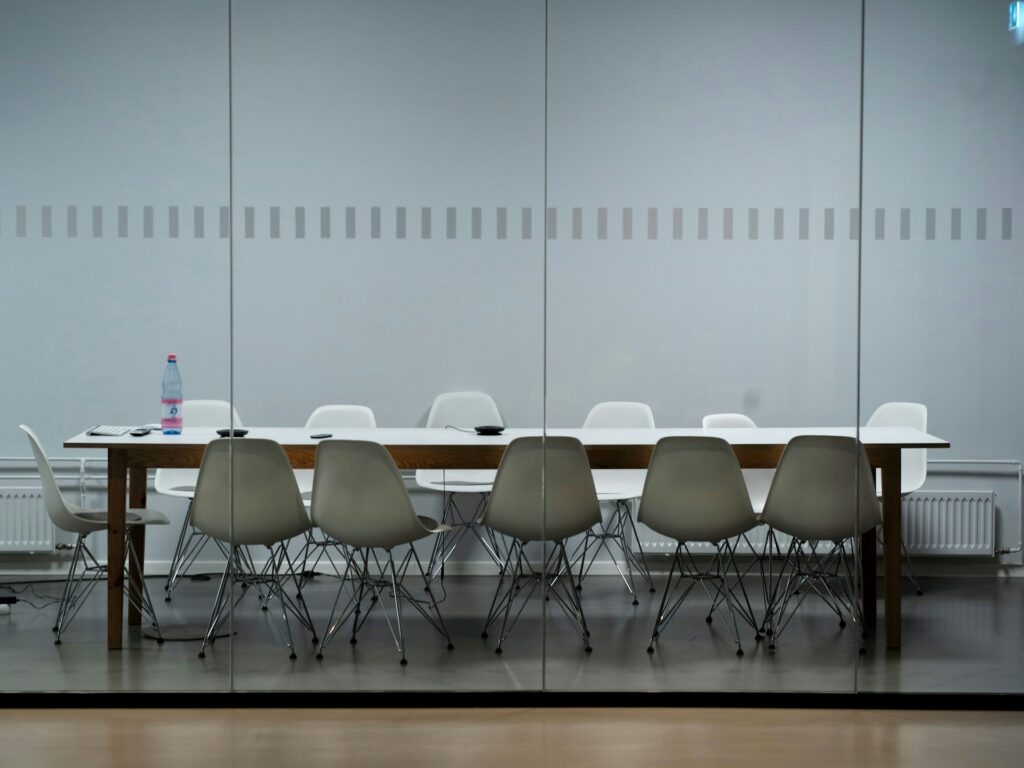
Glass-walled conference rooms have two recurring problems: presentations visible from the hallway, and confidential video calls that anyone walking by can watch on screen. Neither is a hypothetical in a South Lake Union office with heavy foot traffic between desks.
A mid-opacity FASARA finish addresses both without turning the room into a box. Custom-cut FASARA can also carry a logo or graphic element on the glass, which turns a privacy fix into a small branding opportunity at the same time.
Most commercial leases require tenants to restore the space to its original condition on exit, which makes permanent glass modifications a hard sell to a landlord. FASARA can be applied to existing glazing and removed without affecting the underlying glass, so approval is usually simpler than it would be for etched or replaced glazing.
That flexibility matters most in Seattle’s leased office market, in South Lake Union, downtown Bellevue, and First Hill, where tenants often don’t own the building and need changes that reverse cleanly if the lease ends or the layout changes.
A FASARA installation moves through a few clear stages, starting with a look at the actual glass involved.
As a 3M certified dealer, our installation keeps the FASARA warranty intact. Removable film applied by an uncertified installer can damage the glass on removal and void the manufacturer’s warranty in the process.
Request a decorative film design consultation. We’ll bring the pattern catalog to your office, assess your glass, and give you a specific recommendation before you commit to anything. Contact D&A Customs or call (425) 633-6288.